Showing posts with label Lawrence county alabama. Show all posts

Friday, April 26, 2013

The Booth Saga continues: Thomas Harper Booth, Sr.


Thomas Harper Booth was the brother of Dr. George Washington Booth and the first cousin of Dr. G.W's Booth's wife, Mariah Booth Winfield Moffett Booth. In her chancery suit of 1840, Mariah and her daughter Mary Ann Moffett jointly sue both Washington and Thomas Harper Booth. Mary Ann was just a child at the time, having been born between 1828 and 1830. Apparently, Mariah believed the brothers to be in 'cahoots' when it came to trying to 'rip her off', to put it in modern terms.

Thomas Harper Booth also had his say in the 1838 Civil Suit that resulted in the divorce of Dr. G. W. Booth and Mariah.  I write Thomas Harper Booth's name out completely in order to not have him confused with his father, Harper Booth or his brother-in-law, Thomas Harper. Thomas Harper (sans Booth) was likely a relative of the  Harper Booths mother, Elizabeth Harper Booth. The old landed gentry liked to 'keep it in the family', meaning wealth and property, and there are several instances of seeing several members of the same family intermarry with another family of equal ilk or for cousins or even nieces/uncles to marry.

The above picture is of Thomas Harper Booth and his third wife, Nancy Chilicoat Delaney Booth. Tom had a sizeable family of 18 children in all and three marriages. He was born in Mecklenburg County, Virginia, grew up in Granville County, North Carolina, removed to Lawrence County, Alabama, followed his father in to Franklin County, Alabama, where his mother, Nancy Harriett Jones Booth, would be buried, and then into Itawamba County, Mississippi, just across the state line from where the family resided in Alabama.

While his father and his brother ventured on over to Lee County, Thomas Harper Booth remained in Itawamba, where he would be buried in 1871 at the age of 63.

The following is the statement of Thomas Harper Booth, attached to the divorce papers of Dr. George Washington Booth and Maria(h) Booth Winfield Maffitt Booth.

The State of Alabama Lawrence County to wit }

in the sixth district of the Northern Chancery Division of the state of Alabama. The answer of Thomas H Booth responding to the bill of complaint of Maria B. Booth & Mary Ann Moffett complaining by their next friend Vinkler H Jones against this Respondent George W Booth, Wm A Booth and Wm H. Moffitt. 

This Respondent in answer to the same & to such parts as he is ordered it is important for him to answer unto answers  & says that he had one small negro girl named Louisa in his possession bound to him by the said George W. Booth, he said G. W. Booth retaining the privilege of retaking her at pleasure . This Respondent further states that the said negro girl was taken from his possession & without his knowledge or without his having aided and abetted in the matter in any  way or manner. This Respondent adds that this complainant, Maria B Booth, if  she was heard as set forth in her bill that this Respondent had any agency in the affair as charged in her amended bill was misinformed.
This Respondent alleges further that said complainant Maria B.  seems to possess in a high degree the faculty of believing  anything can deceive to her interest.

This Respondent having fully answered prays to be hence dissmissed with a desire for his costs in this.


Thomas Harper Booth in the U. S. Census


Name:Thos Booth
Home in 1840 (City, County, State):Franklin, Alabama
Free White Persons - Males - Under 5:2
Free White Persons - Males - 30 thru 39:1
Free White Persons - Females - Under 5:1
Free White Persons - Females - 20 thru 29:1
Persons Employed in Agriculture:1
Free White Persons - Under 20:3
Free White Persons - 20 thru 49:2
Total Free White Persons:5
Total All Persons - Free White, Free Colored, Slaves:5

ame:Thomas H Booth
Age:42
Birth Year:abt 1808
Birthplace:Virginia
Home in 1850:District 5, Haywood, Tennessee
Gender:Male
Family Number:1207
Household Members:
NameAge
Thomas H Booth42
Mary Booth32
Thomas Booth14
Susan Booth12
Henry Booth10
John Booth8
Wm Booth6
James Booth4

Thos H Boothe
[Thos H Booth] 
Age in 1860:52
Birth Year:abt 1808
Birthplace:Virginia
Home in 1860:Itawamba, Mississippi
Gender:Male
Post Office:Smithville
Value of real estate:View image
Household Members:
NameAge
Thos H Boothe52
Nancy Boothe26
Henry Boothe19
John Boothe17
Wm Boothe16
Jas Boothe14
Jane Boothe10
Robert Boothe6
Margaret Boothe4
Harriet Boothe2
Caroline Boothe3
Frances Boothe1
Thos Boothe24
Mary Boothe20
Marth Dulana9
Name:Thomas Booth
Age in 1870:61
Birth Year:abt 1809
Birthplace:Virginia
Home in 1870:Township 8, Itawamba, Mississippi
Race:White
Gender:Male
Post Office:Fulton
Value of real estate:View image
Household Members:
NameAge
Thomas Booth61
Nancy Booth36
Jane Booth18
Margaret Booth14
Robert Booth16
Harriet Booth12
Emiline Booth8
Alley Booth6
Ollie Booth4
Francis Booth1
Thomas H Booth served as a Sergeant in the Confederate Army.

Name:Thomas H Booth
Rank at enlistment:Sergeant
State Served:Mississippi
Service Record:Enlisted in Company I, Mississippi 2nd Cavalry Regiment.
Sources:Index to Compiled Confederate Military Service Records

Following is a Deposition Given by Susan, one of the two daughters Thomas Harper Booth had by his second wife, Mary Ann Farley:


  • 1900 Susan Ann Booth Eaves deposition

  • Farley - Grimes GrantWritten: 1900Depositions of Susan Ann Eaves taken in cause No 2312 in the District Court ofCoryell County, Texas styled Susan Ann Eaves vs J.W. Letson et al filed 16th dayJany 1900.Said Depositions show that S.A. Eaves is 61 years of age, resides in Johnson County, Texas, is plaintiff in said cause, that she was never personally acquainted with Henry Farley, that he was her grandfather, that he is dead, and do not know when he died, that her grandmother is also dead, that Henry Farley had two children surviving him, Elmira and Mary Ann Jane, that Mary Ann Jane washer mother, Elmira was her aunt, that her mother died in Miss in 1854 was married once only to Thom H. Booth, that her father died in 1874 that her mother had eight children, Thos Harper, Jr, Susan Ann, Henry,John Washington, Willie Archie, James Madison, Elmira Jane and Robert Fletcher. Henry, Elmira Jane,James Madison and Susan Ann are living, the others are dead.Thos Harpers Jr. died in Miss in 1888, John Washington died during the Civil War, William Archer died during the Civil War, after being captured and carried North and do not know exectly when or where. Robert Fletcher died in Johnson County in 1896. Thos Harper Jr. and Robert Fletcher have been married, the other two who are dead were never married and leave no children. Thos Harper,Jr and Robt Fletcher both left children.John W. Booth and William A. Booth were my brothers, they died unmarried. My mother died without a will. I was married Nov 10th 1853 to C.C. Eaves. I have been living with my husband ever since, and am still living with him. The conveyance from Frederick M. Grimes and Elmira S. Grimes to my father was simply to give my mother her part of the land. I have frequently heard my mother referto this as hers.George W. Booth and John F. Booth the parties named, were my Fathers Brother's.They were acquainted with my Mother in her life time. I knew about Thos H. Booth and Nancy Booth making the deed above mentioned, some time after the deed was made I learned they received a negro and some money for it, but I do not know how much. Geo W. Booth and John F. Booth subsequently took this consideration back. The consideration referred to was returned to Geo W. and John F. Booth because Thos H. Booth could not make title to the land. The intentions in returning it was to call the trade off. I do not know that Geo W and John F.Booth agreed to do in order to procure the return of the consideration. The land referred to was the separate property of my mother. This conveyance inquired about was by my father and his second wife, Nancy. After making the deed my father wanted me and my brother, Thos H. Jr to ratify the conveyance and offerme a small tract of land for so doing. My brother and myself refused to do this and thereupon the consideration was returned and the trade was declared off because of this defect in the Title attempted to be conveyed by my Father and Nancy Booth.My Father claimed no interest in the land. The conveyance from Frederic M.Grimes and Elmira S. Grimes to my father was simply to give my Mother her par tof the land. I have frequently heard my father refer to this land as my mothers and never heard him claim it as his own and the land was always represented and understood to be the separate property of my mother.


    The following is from an 1899 with mention of Thomas Harper Booth:


    • Booth-Farley 1899 deed

    • Farley - Grimes GrantWritten: 1899Affidavit of Jane B. WiggleDated March 13th, 1890Filed for record June 23, 1899Recorded in Vol 23 page 267 in office of the County Clerk Coryell County, TexasState of MississippiCounty of ItawambaPersonally appeared before the undersigned authority Mrs. Jane B. Wiggle whobeing duly sworn on oath says: I am the daughter of Mary J. Booth and my motherwas a daughter of Henry Farley to whom was granted a survey of land in CoryellCounty, Texas, Mary J. Booth who was the wife of T.H. Booth.Mary J. Booth died without leaving a will about the 1st day of Feby 1854 inCounty of Itawamba State of Mississippi, T.H. Booth her hsuband died withoutleaving any will about the 29th day of Jany 1874, in the county of ItawambaState of Mississippi, affiant further says that Mary J. and T.H. Booth had onlyeight children who are as follows to wit:1st Susan Ann Booth who married C.C. Eaves and who now resides in the County ofJohnson, State of Texas2nd T.H. Booth who died about the ---- day of Dec 1888 in the County of Lee,State of Miss and left surviving 4 children.3rd Henry Farley Booth now living in Itawamba Co MIS4th John W. Booth who died in the Civil War in 1863-4 and who was never married.5th Wm. P. Booth who died in 1863 in the Civil War and was never married.6th James M. Booth who now resides in Johnson Co, Texas7th Jane B. Booth this affiant who married C.C. Wiggle and resides in ItawambaCounty, MS8th Robert F. Booth who died 5 or 6 years ago and who left surviving children. Affiant says tht the above named children are the sole and only heirs of Mary J.Booth.Jane B. WiggleSworn to and subscribed before me this the 13th day of March A.D. 1899.J.S. Davis, clerkAdditional Comments:Henry Farley was father of Mary Ann Jane Farley who married Thomas Harper Booth around 1833 (probably in Lawrence Co. AL) and Elmira Susan who married F.M. Grimes (Washington Co TX). Henry and wife, Nancy White, and daughter, Elmira Susan Farley left for Texas in 1831.Henry applied for a Texas Land Grant, but died in 1834 before he could receive the title.Daughter, Elmira S. married Frederick M. Grimes. He was administrator on Henry Farley estate and applied for the title to one league and one labor of land Henry Farley had been granted. This application was approved Aug 2, 1828 in San Felipe de Austin.Nancy Ellen White Farley remarried in 1834 to Henry Hudson. She died in 1838.This deed is confusing because Thomas Harper Booth whose 3rd wife was named Nancy, also had a son, Thomas Harper Booth, Jr. . However, Thomas H. Booth, Jr. married Dec 12, 1854 (after this deed of Sept 1854) to Mary Virginia Priddy.The land was located on the Leon River in what is now Coryell County, Texas. These deeds are recorded in Coryell County.Thomas H. and Mary Booth has these children as proven by deeds in Itawaba County and Coryell County pertaining to this inherited Farley Land GrantThomas H. Booth, Jr.Henry Farley BoothJohn W. Booth (deceased by 1867 deeds - may have died in Civil War)William Archie Booth (deceased by 1867 deeds - died in Civil War)Pvt Co H 1st M Inf captured Feb 16, 1862 Ft. Donelson. Died Mar 4, 1862 CampMorton IN. Remived to lot 285 section 32 Crown Hill Cem Confed reintered on Oct27, 1931.James Madison BoothJohn F. BoothGeorge W. Booth


      The following is an account of the Booths in Texas, how Thomas eloped with his second wife and how she became depressed in Texas. 
      • THOMAS HARPER BOOTH AND MARY ANN JANE FARLEY "ELOPED"

      • Charlotte-Mecklenburg County Virginia USGenWeb Archives Biographies.....Farley, Henry   F. 1790 - 1834File contributed for use in USGenWeb Archives by:Virginia Crilley http://www.rootsweb.com/~archreg/vols/00003.html#0000642 September 21, 2007, 11:56 amAuthor: Virginia Crilley
        Mary Ann Jane Farley  "eloped" with  Thomas Harper Booth around 1833 (probablyin Lawrence Co. AL). Thomas had previously been married to This couple moved around quite a bit, living in Itawamba County, MS (about 60miles west of Lawrence, AL), and even in Texas, Austin Co. for short periods oftime.Family story, "Mary Ann cried for a whole year because they had no slaves to dothe work in Texas."Mary Ann and Thomas Harper had six sons and  two daughters.Elmira Susan married Frederick Miller Grimes of Washington Co. Tx on Jan 29,1838, probably at the home of her mother, Nancy living in nearby Austin County.They settled on their farm on the county line of Washington/Austin.Nancy Ellen White Farley, remarried around 1838 to Henry ? /Obadiah?/JoshHudson.  The court records show that Nancy appointed Isaac M. Pennington topursue her husband's Texas Land Grant.  The courts ruled in favor of thedaughters, and Frederick M. Grimes proceeded with the land claim.Family story: When Nancy Ellen died (aft 1838) her daughter Elmira Susancouldn't attend the funeral because of the high creeks due to heavy rains.As "heirs of Henry Farley" the daughters received land in what is now CoryellCounty  In 1850 when Fort Gates (later Gatesville) was set-up with soldiers toprotect the settlers, Elmira and Frederick moved there.In 1852 they sold this land to their son, Samuel, and moved to land in thesoutheast corner of Coryell County.Several deeds are made with the joint signatures of Elmira and Mary Jane andtheir respective husbands.http://www.usgwarchives.net/tx/austin/austoc.htm


Wednesday, April 17, 2013

The Players, Game One: The Counties

The 19 page document that Mariah Booth Winfield Moffett Booth divorced her second husband, and first cousin, Dr. George Washington Booth within, lists dozens of witnesses, the biggest most of them related to the two. It appeared to be a nasty divorce from a short-lived marriage, with Mariah accusing her husband of an assortment of motley offenses from drunkeness, to having his pleasure with the slaves, to abusing her verbally and otherwise and of selling off her property, people and property, at random, with no consultation or conference with her.

To make her point, she seems to have drug the entire Alabama Booth Clan into court. The good thing about it is that Mariah and her divorce helped to make clear several family connections which have seemed to befuddle descendants in other states.

While the family lived in Alabama for awhile, most of them did not stay there. The Booths were at traveling bunch, with wheels on their heels and an itch in their britches. By Booth, I not only mean those with the surname Booth, but surely those, I also refer to those with Booth blood and family connections: The Jones, the Watkins, the Simmons, the Noels, the Kernachans, the Malones, the Winfields and all the other intermarried families.


To understand the various counties that the family settled in, after traveling from Virginia, into North Carolina or Tennesse or South Carolian first, it helps to how close they actually were.

Harper Booth, father of George Washington Booth and patriarch of all of those other Dr. Booths, moved from Mecklenburg County, Virginia, into Halifax County, North Carolina, then to Lawrence County, Alabama by 1825 and later into Franklin County, Alabama, just next door, before crossing the border to Mississippi into Itawamba, Tishamungo  and Lee Counties.
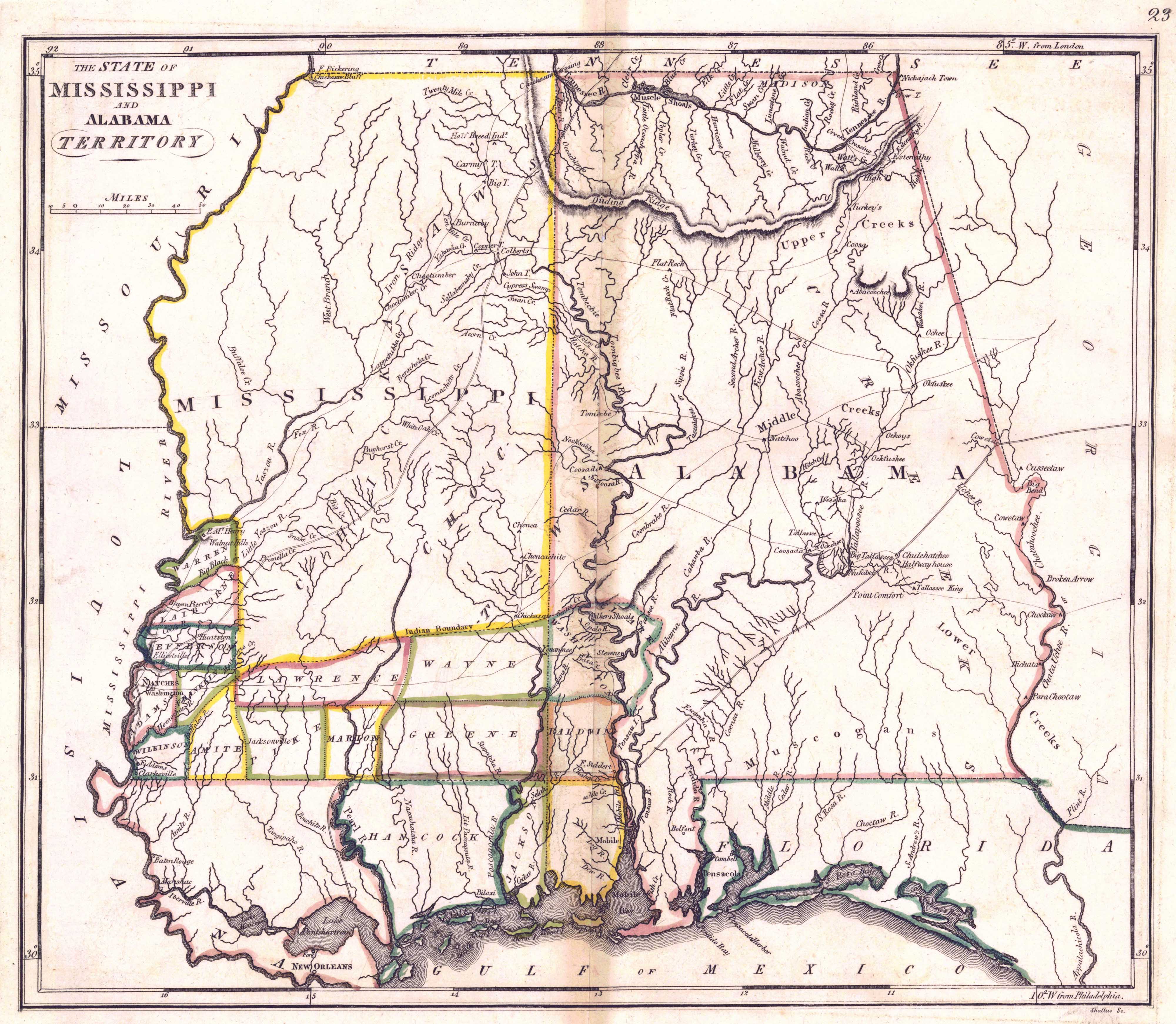
The Alabama counties and the Mississippi Counties were in close proximity to each other.

The Booths and et al basically built their Plantations along the Tennesee River. Lauderdale County, which will come up many times in this research, lie along the north border of the Tennesee River in the most northwest corner of Alabama. These were the pioneers of the Muscle Shoals.

Getting a feel of where they were located, and while awaiting the arrival of other documentation, I am going to explore the individuals named and involved in Mariah's suit.


Tuesday, April 16, 2013

Shocking Revelations


I recently the 19 page document that is the 1838-1840 Civil Suit that Mariah Booth Winfield Moffat Booth brought against her husband and others. While the ancient script is hard to make out in places and full of "legalese", it's meaning is clear and there are enough words that are deciperable to transfer meaning. 

It is actally a grouping of documents and Miss Mariah aka 'Scarlett' is suing er'body. 

She is not happy and what has befallen her is not to her liking. When Mariah married the first time in 1826 to Dr. James Moffatt or Moffett of Fayetteville, NC and Chester County, SC, she rather naively put her sizable estate under the control of her brother-in-law, Dr. William H Moffett of Fayetteville during the marriage contract. Why her brother-in-law and not her husband, I have not yet determined. When she married her first cousin, Dr. George Washington Booth, in 1836,  she declared him trustee and a document transferring trusteeship was issued wherein Dr. Moffett found Dr. G. W. Booth to be an able recipient of the trust. 

Mariah and James Moffat/Moffett had one child, Mary Ann, who is shown in the 1830 census of Marlboro County in South Carolina as being a female under the age of 5, so she was born circa 1827-1830, as her parents wed in 1826. By 1836, when Mariah wed Dr. Booth at her home at Level Green in Marlboro County, her father Joel Winfield's plantation, Dr. James Maffett was declared deceased and Mariah and her child relocated to Lawrence County, Alabama, where her Uncle Harper Booth had removed from Mecklenburg County, Virginia with a stop in Halifax County, North Carolina. 

The first page of the 1838 documents is titled "Maria Booth & Mary Ann Moffitt vs George Booth & William Moffitt. Circuit Court 1838 Chancery sitting. 


In this document, several members of the Booth family are called to testify. Those served are from various counties in Alabama. This second to the side states that Maria Booth and Mary Ann Moffet "by their next friend Vinkler Jones Complnt. "

vs Geo. W. Booth + Thos. H. Booth + others  Depfts. 

The defendants Geo W Booth and Thomas H Booth will take notice that on the 27th day of the present month at Bonds Farm house at Leighton in Lawrence County, Alabama, the complaintants will take the deposition John L Townes, Alexander G. Booth, Sherrod Anderson, Amos Jarman, Lunsford A Sledge, Charles Ottaway, John J Morrow + Samuel Scott. And on the next day, the Complaintants will take the Deposition of  Sarah Noel, Reuben Booth, Minerva R Jones, Maria S Booth, Charles G Young, William W Harper and Thomas B Jones. (The name of Robert Kernachan has been marked out.) at the dwelling house of Mrs. Judith Jones in Lawrence County, Alabama to b?*** t as in d**n* in said cause pending in the Chancery Court at Moulton in the County aforesaid. 

May 12 1840                              Signature of   Irvine


And in the same can the complts will take the deposition of  of Robert Kernachan  at the office  of Joseph in the town of Florence in Lauderdale County State of Alabama on the 21 st day of  May instant to be read as evidence in Compts behalf on the trial of said cause. 

May 12 1840               J. L.  Irvine  Sol.  for Compts.  


This document will take a considerable amount of time to interpret and decipher. May of the pages are smeared and the handwriting difficult to read. There are juicy details in the middle that give way to the personalities and lifestyles of the Booth family and of Mariah and G. W. in particular.

The meat of the entire document can be summed up in its last paragraph, however.

And it is further decreed that the bonds of matrimony heretofore existing  between the said Maria B Booth and George W Booth be desolved and  that the said Maria B  be hereforeto divorced  from the said George W Booth and that the said George W Booth pay the costs of this said ----. 

A Bowie, Chancelor


As I had guessed, Mariah and George were divorced, the proceedings beginning only two years after their marriage.

The accusations within and the persons mentioned in the suit were major players in the early history of Alabama, most of them having strong Virginia and Carolina ties, and most of them interelated. My next step is to interpret page by page, to find out  Mariah's accusations against her husband, Dr. George Washington Booth and his brothers and then to the mystery following, Where does she go from here? and What happened to her daughter, Mary Ann Moffet?


Monday, April 8, 2013

The 1840 Chancery Suit

One of the documents I have waited a great deal of time for has arrived. This is the first page of the Chancery Suit between Mariah Winfield Booth, et al, and her second husband, George Washington Booth and his brother, Thomas Harper Booth. 

The document was simply an inquisition into whether Maria was owed money given to her husband during the hire of two servants by his relatives. I am awaiting other documents. Mariah and Dr. Booth may have been separated by then. Married couples had trouble in the 1800's just as much as they do today. They just handled it differently. 

I am awaiting other documents that might help me paint a broader picture, but this one was very important in helping me to establish a few things.

First: The less than 5 year old girl shown as a dash in the home of James Moffett in 1830 did not die. She is listed with her mother in this chancery suit and her name was Mary Ann Moffett.

Second: Mariah Booth Winfield Booth was alive and well in 1840.

Third: I know where Dr. George Washington Booth settled with his wife (and her daughter), after their 1836 marriage. He took her back to his home is Lawrence County, Alabama. 

But more research is needed and other questions arise.

1) Dr. Booth is in Mississippi in 1850, and no Mariah. Did she die in Alabama?

2) Did Mary Ann Moffett marry, and if so who? And where did she live? And when did she die? Did she have descendants?

3) Did Mariah and Washington have any children?

Every detail is a piece of a puzzle. Will it ever be complete?

The document reads:  The State of Alabama Lawrence County in pursuance to the written....came before me Manaseah B Hampton, Justice of the Peace....on the 27th day of May 1840, at the Town House of W. W. Bower...Alexander G Booth and John J Morrow both of legal age... wherein Mariah Booth and Mary Ann Moffitt complained against George W. Booth and Thomas H. Booth...

To Alex Booth was asked 4 questions:

Did you hire a negro boy from George W Booth in the year 1838?

Answer: I Did

What was you to give for the hire of said Negro Boy named Jim?

Answer: One hundred and forty dollars

How long did you keep the boy in your employment?

Answer: Nearly 5 months

What amount of  money did you pay and to whom did you pay it?

Answer: I paid to my father Harper Booth forty dollars for the benefit of George W. Booth.

The same questions were asked of a Mr. John J Morrow concerning the hire of "Bill".

Mariah and her daughters complaint was that they were entitled to a share of the money paid for the hiring due to the fact that the boys were left to her as part of her inheritance and that her husband, possibly estranged, owed that share to her.

Hopefully, the 1838 documents will make things even more clear.

Now to find out more about Mary Ann Moffett.


Friday, March 22, 2013

Imagining Mariah

A Southern Belle


In imaging Mariah Booth Winfield Moffett Booth, I envision her as a bit of Scarlet O'Hara, the quintessential Southern Belle. She was an heiress, mentioned not only in her father, Joel Winfield's will in Marlborough County, South Carolina, but also her grandfather, Joshua Wingfield in Mecklenburg County, Virginia.

Her little brother, Joel Jr., did not live to grow up and had passed by the time their grandfather did in 1818, Making Mariah sole heiress to her father's estate and his share of her grandfather's estate.

Mariah married twice. First to James Moffett/Moffit/Maffet of Scottish decent and of most prior to the marriage, Fayetteville, North Carolina, where her cousins Jordan and John W. Howell resided.

James Moffett was a Physician and brother of William H. Moffett and the Rev. John Newland Moffett or Maffet.
Moffat in Dumfriesshire


Mariah's second marriage in 1836, was to another Physician and her first cousin, Dr. George Washington Booth. Both were grandchildren of Thomas Booth of Mecklenburg County, Virginia. Mariah was the daughter of oldest sister Mary Marler Booth, known as Polly and Washington was the son of Harper Booth, who would move from Virginia, first to Halifax County, Virginia and  then later to Lawrence and Franklin Counties in Alabama. He and most of his sons would later remove to Mississippi, living in Itawamba, Tishomingo and Lee Counties.


 Mariah Booth Winfield Moffett Booth, I believe, did not live to be an old woman. I find her second husband alone in 1850 and some documents involving her in 1838 and 1840 in Lawrence County, Alabama, that I have not yet been able to  examine. She was born circa 1802, as her parents were married in Virginia in 1801, although her father had been active in Marlboro County, South Carolina for over a decade.  


Mariah was well educated. She attended a well known female academy and was sent to Boston for awhile to finish her education. This may explain her inclination for doctors.


At the time of her first marriage, in 1826, Mariah was not a desperate teenager, as many of the country girls who married as quickly as possible. She was an astute, educated and possibly a bit spoiled Southern lady of a comfortable 24 years old.

Name:James Moffit
Home in 1830 (City, County, State):Marlboro, South Carolina
Free White Persons - Males - 30 thru 39:2
Free White Persons - Females - Under 5:1
Free White Persons - Females - 20 thru 29:1
Slaves - Males - Under 10:5
Slaves - Males - 10 thru 23:4
Slaves - Males - 24 thru 35:4
Slaves - Males - 55 thru 99:1
Slaves - Females - Under 10:5
Slaves - Females - 10 thru 23:4
Slaves - Females - 24 thru 35:4
Free White Persons - Under 20:1
Free White Persons - 20 thru 49:3
Total Free White Persons:4
Total Slaves:27
Total - All Persons (Free White, Slaves, Free Colored):31
The 1830 census of Marlboro County, North Carolina, shows her husband, Dr. James Moffett as Head of Household, with one white female between the age of 20 and 29, obviously Mariah and another young female under 5 years old. This shows that they possibly had a daughter. If this child survived to adulthood, I have not found her yet. I am in hopes that the papers from Alabama may shed a light on this mystery.

The census also shows that the Moffetts had 27 slaves in their household. Most Physicians in those days did not require the assistance of a number of slaves, perhaps one or two at the most as drivers or nursing assistance. This shows that the good doctor had likely moved onto Level Green, the plantation of Joel Winfield. 
Moffat Loop Road
This beautiful scene is the area of Scotland where the Moffats (Moffett, Moffit) hailed from.

In 1828, Dr. James and Mrs Mariah Moffett contracted in Marlboro, South Carolina with a Mr. John Goodwin to build a house at Level Green, formerly known as Winfieldville. 
A Southern Piazza

The following is an excerpt from the Indenture dated October 17, 1828:

"build at the place called Level Green in Marlborough District a dwelling house of the dimensions and according to the specifications following to wit the said house to be forty-eight feet long and forty two feet wide and to be one story high, ten and a half feet wide in the clear, the width including a piazza in front ten feet wide to have four rooms on the ground floor and two rooms in the garret, a  papage (passage?) twelve feet wide, a portico in the rear sixteen feet long and eight feet wide and a stair case in the papage, to have a door and four windows in the front, the same in the rear and two windows in each end, to have four dormant windows  in the roof, viz three in front and one in the year and two windows in each gable end, the windows below to have eighteen lights and those above to have twelve lights each all of eight by ten glass, the House to be set on Brick pillars, three and a half feet high to have two chimneys with a fire place in each room: and to be finished with closets in the usual manner and the said John Goodwin is to furnish at his own cost the following materials and none others for the work hereby contracted to be done, to wit, Bricks and lime for the chimneys and pillars, all the glass, nails, hinges, locks, and fastenings-the said house to be erected, including all the mason work, and carpenter work above specified and to be done in a plain, substantial and workmanlike manner- And the said James Moffett and Mariah B. Moffett do hereby for themselves, their heirs, executor and administrators, .....the rest is legalese dealing with the contract. 
A Portico


The above link is to a blog by Penny L Richards describing students at the academy. Margaret Jane Adam married Dr. William H Moffett in 1821. He was the brother of Mariah's first husband, James. 

They were not ordinary people.


Mariah had appointed her brother-in-law as trustee over her estate when she married James in 1826. When she married her cousin, Dr. Washington Booth in 1836, Dr. William H. Moffett was released as trustee. I do not know why she did not assign her first husband, Dr. James Moffett as trustee. Perhaps she did not 'trust' him. Married women had no legal control over their finances in those days. Mariah Booth Winfield had more control than most. 

12 Apr 1826, issue
72. Married in Cheraw on the evenning last, by Rew George W. Hathaway, Coct. James Moffett of Fayetteville to Miss Maria Winfield of Marlboro Co. SC.


Her Father: Joel Winfield  from 
Book Title: A History Of Marlboro County

CLERKS OF COURT.

                               Time
                                of
                              Service.
1 John Wilson                  1785
2 Joel Winfield                1787
3 William Fields               1788
4 Drury Robertson              1789
5 Joel Winfield                1790
6 Jno. Winfield                1804


Joel Winfield held the office of Clerk of Court in 1787 and then again in 1790. His younger brother John Thrower Winfield held the office after his death in 1803. Her uncle Drury Robertson, husband of the Winfield brothers sister Mary, held the office in 1789.

ORDINARIES OF MARLBORO.

Joel Winfield, clerk, served as ordinary till 1803.
William Easterling served from 1803 till his death, 1835.
Lewis E. Stubbs elected in 1835.

The early records of Marlboro are filled with Joel Winfields signature performing marriages and witnessing deeds. Marlboro County, SC Post Offices - 1785 to 1971

Winfield
Marlboro
-
Joel Winfield
1/1/1801
-
aka Marlboro C.H.


Joel was the Postmaster of his own town in the early years. The following excerpt is from 

  A History of Carlisle, South Carolina

n 1785, the new county of Marlboro was created within the overarching Cheraws District at the northeastern corner of South Carolina. The District Court was held at Long Bluff, and the lower County Court House ofMarlboro County was established a few miles north of Long Bluff along the Great Pee Dee River near Gardner's Bluff. It was simply called Marlboro Court House and only lasted a few years.

The town of Carlisle had begun in 1785 and was soon thriving, so the local populace requested that it become the new County Seat. The exact date is currently unkown. However, it was located on the north bank of Crooked Creek where it crossed the old River Road.

Carlisle soon became called Winnfieldville, which was shortened to Winfield by 1801. Winfield remained the county seat until 1822 - the result of an 1819 Act of Legislation moving the county seat to a more-central location.

As Winfield, the town was granted a U.S. Post Office on January 1, 1801, with Mr. Joel Winfield as the first Postmaster. It remained in operation until April 5, 1822, when the new town called Marlboro C.H. was granted its Post Office.

In 1826, the town of Marlboro C.H. was renamed to Bennettsville, and it has been the county seat ever since. The town of Carlisle/Winfield no longer exists, but a granite monument stands where the courthouse was located.


Drury Robertson.

The Drury Robertson who served Marlboro as Clerk of Court and later as a Representative was Drury Robertson, Jr. and a Revolutionary War Major. He
married the sister of Joel Winfield, Mary and aunt of Mariah. The Winfields, Meanly's, Robertsons and Freemans migrated from Mecklenburg and Brunswick Counties in Virginia, first to Anson County, North Carolina. Drury Sr. died in Anson. Some of the younger generation then migrated either to Tennessee or Marlboro, South Carolina.

The following clipping is from:
The following article was transcribed from microfilm of the Pee Dee Advocate newspaper, and contributed by Mary Lewis, 2004.
Among the early representatives of the county a name prominent in early affairs, is that of Maj. Drury Robertson, a representative man in every respect. He married a Miss Winfield of Virginia. He was an extensive land owner, his large estates covering thousands of acres of land, beginning above Goodwin’s mill and going to Pee Dee river. He built the house at Easterling’s mill (now McLaurin’s mill), and this is one of the oldest houses in the county, being built one hundred and thirty years ago. Lafayette spent the night here on his way to Georgetown and here Gen. Winfield Scott read law while visiting his relatives, the Robertsons. Maj. Robertson left two daughters; one married a Hearsey and moved West. George Hearsey of Blenheim is her grandson. The other daughter married first an Ellerbe, the father of Col. W. T. Ellerbe.

After his death she married a Prince, and had one son. There are no living descendants. Mrs Prince, as a widow, lived at the "Old Prince Place", which was a part of Drury Robertson’s estate, with her son, Col. Wl T. Ellerbe, a man of noble character and broad culture. He represented his country many years in the legislature. This magnificent home was surrounded by an old Colonial garden, the only one of the kind in Marlboro. It covered several acres of ground and was fashioned and laid out much in the style of the garden at Mt. Vernon.
The flower beds and borders were hedged with box wood and in this plot bloomed and boloosmed from common hollyhocks, sweat alyssum, and every ready growing flower to the rare exotics that with care and attention could be made to live in this clime. Mrs Prince was an invalid from a fall, and Col. Ellerbe designed this garden for her pleasure and here with her companion, Mrs. Black, much of her time was spent. The pleasure circle was a circular plot lmade of cedars planted in a circle, their tops tied together wen young. They were kept pruned and the doors and windows were shaped. Around the roots of the cedars jasmine and woodbine trailed, and when in bloom the contrasting colors lent charm to the vision. On the inside of the circle easy chairs and tables were placed for loungers. The last vestige of house and garden were destroyed by Maxwell, a Negro senator, during the Reconstruction period. He got possession of the property by paying the taxes. The finest library in the county at that time was owned by Col. Ellerbe. He and his mother rest in Robertson’s burying grounds just back of Easterling’s mill, and a stately magnolia marks his grave. Mrs. Black after Mrs. Prince’s death became a nurse in the Florence hospital dudring the war between the states. Capt. Henry Easterling a----------- Drury Robertson’s estate including the house, and lived here until his death. John L. McLaurin lately purchased part of the property.

I imagine Moriah fashioning her garden much after her Aunt Mary Robertson's with exotic blooms and interesting walks. 

I earlier research, I found a description of her wedding to Dr. George Washington Booth at her home in Bennettsville online in an old newspaper. I have not yet been able to discover that article again, but will post it when I do. It described a beautiful porch drapped in flowers and tents set up in luxury for the many guests of the bridal couple, arriving from all over the country. It must have been an event. They had to arrive by cart and buggy in 1836, as no railway yet passed that way. 

These were not ordinary people. 

John Newland Maffitt, Jr. 

The above link is concerning Mariah's nephew, son of the brother of her first husband James, the Rev. John Newland Maffitt/Moffett/Mofit, Sr., a Methodist Episcopal minister. In doing research the other day in Fayetteville, I discovered her cousin Jordan Howell was also a member of the Methodist Episcopal Church in Fayetteville. 

These were not ordinary people. 

The following clip is from "Hybart Family History". This is concerning the daughter of William H. Moffett and Mariah's niece.

16 THOMAS LEWIS HYBART born about 1803 in Canada died 1 January 1847 buried Cross Creek Cemetery, Fayetteville
     (spelling of name taken from tombstone), married (marriage bond 16 February 1843 Cumberland County, North
Carolina) to Eliza Moffitt born 1823 died after 1880.

          Thomas L. Hybart was a lawyer, newspaper publisher, and representative from Fayetteville in 1835 to the North
     Carolina House of Commons who was said to have "a ready tongue and a trenchant pen". He was a strong supporter
of General Andrew Jackson. He was one of the managers of a subscription ball in 1829, indicating that he was active
in the social life of the area. When a fire destroyed a great part of Fayetteville in 1831, the house of T. L. Hybart,
Esq., located at the intersection of Union and Mason streets, was saved only by great effort.
          Children: 1. William M. Hybart; 2. Thomas Lewis Hybart, Jr.


Another article on John Newland Moffett/Maffit


Article on Margaret Adam Moffett's sister, Eliza Ann Adam


The Booths:

Guntown and John Fletcher Booth

Court Case of John Fletcher Booth, Jr. 

FACTS

Charley Stanford stole a topcoat out of a car and called John Fletcher Booth (defendant), telling Booth that he had the coat Booth wanted and Booth could have it for $20. Stanford set up a meeting with Booth, but was soon after arrested when he was spotted wearing the coat. Stanford agreed to assist the police in apprehending Booth by not telling Booth about the arrest and meeting him in Stanford’s house as planned. The police hid in Stanford’s closet when Booth came over and after Stanford informed Booth that the coat was stolen, Booth said that that was fine and bought the coat. Soon after, the police arrested Booth and charged him with receipt of stolen property. The District Court of Oklahoma County found Booth not guilty of receipt of stolen property because where stolen goods have been recovered by the owner or police, they are no longer considered stolen. Therefore, when they are brought to a defendant with the intent of entrapping him, the defendant cannot be guilty of receipt of stolen goods. However, the District Court of Oklahoma County did find Booth guilty of attempted receipt of stolen property. Booth appealed.
Wills 12 Apr 1803 Will of Thomas Booth In the name of God Amen, I Thomas Booth of Mecklenburg County and State of Virginia being sick and weak in body, but of perfect mind and memory do make and ordain this to be my last will and Testament in manner and form as following:  Imprimis my desire is that all the perishable part of my estate shall be sold by my Executors in discharge of my Just Debts (except what's hereafter devised)  Item I give and bequeath unto my loving Daughter, Mary M Winkfield the following Negroes she has now possession, to wit, Hannah, Daniel, Henry, Evelina, Jacob, Junney, also two beds and furniture and one Set of China & Silver Tea Spoons which she has now in her possession to her and her heirs  forever.  Item I give and bequeath to my beloved daughter Rebecca Booth the following Negroes, to wit, one Negro woman by the name of Milly and Girl the name of Mariah, also one by the name of Clary, and one boy by the name of Joshua, also two boys by the name of Heartwell & Woodlief, also two beds and furniture, one set of China and half Dozen Silver Tea Spoons to her and her heirs forever.  Item I give and bequeath to my son, Harper Booth the land & plantation whereon he now lives, also three Negroes, to wit, Jack, Lissie and Tom, one Sorrell mare, four head of Cattle, one bed and furniture which he has now in possession to him and his heirs forever.  Item I give and bequeath to my son Thomas Booth three negroes to wit, Joe, Stephen and Betty, one bed and furniture, four head of Cattle, one dark bay mare which property he has now is possession except Negro Betty to him and his heirs forever.  Item I give and bequeath to my daughter, Judith Booth, six Negroes to wit, Pattey, a woman, also Wilson and Nelson her Children, Edy, Gooding and Billy, two beds and furniture, one Set of China ware, 1/2 dozen Silver tea Spoons to her and her heirs forever.  Item I give and bequeath to my son Reuben Booth three Negroes to wit, Sam, Allen and Nancy black one sorrell horse, also the lands and plantation whereon he now lives to take possession of the land at the death of my beloved wife, Saving and reserving one half of my dwelling House to my three daughters, Rebecca, Judith and Salley Booth until they shall marry, also one bed and furniture, two Cows &Calves two Sows and pigs, pott & Oven, one set Caininau? Cups & Saucers, one set Knives & forks, one Set Caininau? Table Spoons to him and his heirs forever.  Item I give and bequeath to my daughter, Massey? Jones six Negroes to wit, Amy, Cressy, Bob, Jinsey, Emmanuel, Metilda, two beds and furniture, yoke of Steers, one Set China ware, half dozen Silver Tea Spoons which she has now in possession to her and her heirs forever.  Item I give and bequeath unto my daughter Salley Booth six Negroes, to wit, Celar, Jane, Ned, Edmund, Peterson, and Amy, two beds and furniture, one Set China ware, half dozen Silver tea Spoons to her and her heirs forever.  Item I lend to my beloved wife the land & plantation whereon I now live during her natural life and all the rest of my estate both real and personal not before devised, and at her death, my desire is that my two granddaughters, Betsy W Harper and Judith GILLIAM Harper shall divide equally with my legatees of all the Negroes and other perishable estate above lent. I do Constitute and appoint my son Reuben Booth and Harper Booth and Charles Cordle my lawfull Executors to this my last will and Testament.  In Witness whereof I have heretofore set my hand and affixed my seal this twelveth day of April one thousand eight hundred and three.  Sig: Thomas Booth Senr (LS)  Signed, sealed in the  presence of  Wit: Martha Jones Malone, Isaac Williams, Thomas C Singleton  At a court held for Mecklenburg County the 12th day of September 1803  This will was proved by the Oaths of Isaac Williams and Thomas C. Singleton, Witnesses thereto and ordered to be recorded and On the motion of Reuben Booth one of the executors therein named who made oath there and together with Joshua Winckfield, Thomas C. Singleton and William Darnwright his securities entered into and acknowledged their hand in the penalty of fifty thousand dollars Conditioned as the law directs. Certificate was granted him for obtaining a probate thereof in due form-liberty being reserved for the other executors therein named to join in the probate when they shall think fit.  Teste: William Baskerville CC 
The book "Charlotte County ... Rich Indeed" Published Charlotte County Board of
Supervisors (1979)
states Henry F. Farley was a deputy sheriff from 1811-1813 and  an Ordinary .

 Henry Forrest Farley   married Nancy Ellen White Nov 2, 1814 Mecklenburg County
VA.

Henry and Nancy Ellen had four daughters, two of which died in infancy. The two
surviving daughters were Mary Ann Jane Farley (1818-Feb 1854 Tx) and Elmira
Susan "Myra" (July 15, 1820-Aug 19, 1889 Tx)

They must have both had adventurous spirits as they began their trek Westward to
unsettled lands. Several other Virginia families probably moved along with them.

Alabama was just being settled at that time. Alabama was first included in the
Territory of Mississippi 1798, Territory of Alabama 1817 and  achieved statehood
in 1819.

After leaving Virginia,  they lived in Lawrence County Al and both daughters
were born there.

After living in AL for about 13 years, the call for settlement of Texas and the
availability of land caused them to head to Texas around 1831.

The story is that they left their eldest daughter, Mary Ann to attend school
perhaps with relatives or friends. She would have been about 13. They took their
younger daughter, Elmira (age 11 years old) with them.

Henry applied for a Texas Land Grant (1 league and 1 labor for families) in
1832, but died in 1834 before he could receive the title. 

Mary Ann Jane Farley  "eloped" with  Thomas Harper Booth around 1833 (probably
in Lawrence Co. AL). Thomas had previously been married to 
This couple moved around quite a bit, living in Itawamba County, MS (about 60
miles west of Lawrence, AL), and even in Texas, Austin Co. for short periods of
time.

Family story, "Mary Ann cried for a whole year because they had no slaves to do
the work in Texas."

Mary Ann and Thomas Harper had six sons and  two daughters.

Elmira Susan married Frederick Miller Grimes of Washington Co. Tx on Jan 29,
1838, probably at the home of her mother, Nancy living in nearby Austin County.
 They settled on their farm on the county line of Washington/Austin.

Nancy Ellen White Farley, remarried around 1838 to Henry ? /Obadiah?/Josh
Hudson.  The court records show that Nancy appointed Isaac M. Pennington to
pursue her husband's Texas Land Grant.  The courts ruled in favor of the
daughters, and Frederick M. Grimes proceeded with the land claim.

Family story: When Nancy Ellen died (aft 1838) her daughter Elmira Susan
couldn't attend the funeral because of the high creeks due to heavy rains.

As "heirs of Henry Farley" the daughters received land in what is now Coryell
County  In 1850 when Fort Gates (later Gatesville) was set-up with soldiers to
protect the settlers, Elmira and Frederick moved there.

In 1852 they sold this land to their son, Samuel, and moved to land in the
southeast corner of Coryell County.

Several deeds are made with the joint signatures of Elmira and Mary Jane and
their respective husbands.
http://www.usgwarchives.net/tx/austin/austoc.htm


I can imagine Mariah being as spoiled as her sister-in-law Mary Jane Farley Booth.