Sunday, May 10, 2020

30 Mothers in 30 Days: Vashita

Have you ever looked at an old 1700's ship manifest looking at the names of the female passengers?
Probably not, but I have. A pattern emerges - Ann, Mary, Jane, Ann, Mary, Jane, Sarah, Elizabeth, Ann, Mary, Jane, Catherine, Martha, Ann, Mary, Jane, Susan, Margaret, Ann, Mary, Joan, Sophia, Mary, Mary, Mary. Why couldn't you people be original????

I've often wanted to time travel to when my 9th Great Grandmother had given birth to my 8th Great Grandgrandmother and was contemplating her name. I'd shake her by the shoulders and scream, "Don't name her Mary!!!".

Every once in awhile, however, you are lucky enough to get a Vashti.


 Vashti <I>Callaway</I> Morton
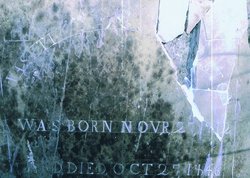
Vashti's broken slate tombstone


I don't have a great deal of information on Vashita "Vashti" Calloway Morton, but more on her than some other female ancestors.

Vashti, as she was called, was born on November 27, 1912 in what is now Stanly County, in the area that is now considered Palmerville, near Palmer Mountain along the Yadkin River. Badin Lake did not exist then and Badin Lake would become her scourge.


Job's Children: A Trip to the Badin Museum
Ferry crossing the Yadkin at the Mouth of the Uwharrie. Stanly County Museum Photo Archives


She was the daughter of Job Calloway and Susannah Martisha Randle Calloway. She was the granddaugther of Isaac Calloway and wife, Elizabeth Arnold Calloway and his first wife, Littie Elmore.

The Randles were Virginians. Colby was born in 1746 in Brunswick County, Virginia. He died about 1804 in Montgomery (Stanly) Couny, NC,, son of William Randle and Anne Marshall Randle, just one of my Marshall lines.

Her paternal grandfather, Isaac Calloway was born in Somerset, Maryland in about 1750. He died about 1801 somewhere along the Pee Dee River and supposedly is buried at the old Palmerville Church. His wife, Elizabeth Arnolds family, Peter Arnold and Elizabeth Greene, came from Onslow County, and hailed from Warwick, Kent, Rhode Island before that.


Palmer Island island, North Carolina, United States
A Bird's Eye View of Palmer Mountain, the Clover-shaped area in the middle of the frame


Oddly, the surname Calloway is said to be of Norman-French origin. Below from Wikipedia.


This interesting surname is of Norman French locational origin, from the place called "Caillouet-Orgeville" in the province of Eure, which is recorded in 1157 as "Cailloel". The placename means "place of stones or pebbles", from the Old Norman "cail(ou)" meaning pebble or stone.


Vashti was the second born of Job and Susannah's 10 children. Her older sister was Mary, and Vashti was followed by: Isaac, Elmore, John, Martisha, Agrippa Gamaliel, Alfred, Kassandra and Sarah.

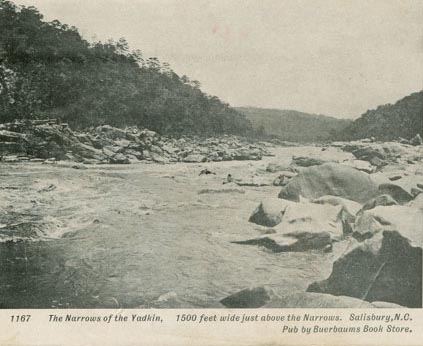
She grew up in the community of  the Yadkin/ Pee Dee settlers in the West Pee Dee portion of the Uwharries, near the famed Forks and Narrows of the Yadkin. For those who don't know, the Yadkin becomes the Pee Dee at its confluence with the Uwharrie River.

Badin - 1836 Stanly STA:N"LY 1836 - Const. April 17 as Ebenezer ...


She attended the old Ebenezer Church that was in what is now Badin, NC. The church and congregation is now Badin Baptist. In the Association Minutes of Badin Baptist is the following information:

"..Wake Forrest College observes the 26th anniversary o the Pee Dee Association....'convened at Ebenezer Meeting House, Stanly County, North Carolina, October 15, 16, 17 and 18 in the year1841,' Stanly County was erected by the General Assembly using the Yadkin River as a boundary line on January 11, 1841. Samuel P. Morton, a former pastor (Of Ebenezer) was elected register of deeds.

Ebenezer Baptist Church Post Office was listed at Stony Gap. Messengers to this Association were William Palmer, William Hall, and Michael Fesperman." Note: Michael Fesperman was Post Master of Stony Gap, at least for a time.


Stanly County: An introduction | UNC Charlotte Urban Institute
View of the Narrows of the Yadkin River from Palmer Mountain. From the Stanly County Museum Photo Archives


In about 1826, at the age of 14, Vashti would marry Samuel Parsons Morton, son of  James Morton and Elizabeth Summers (Summerow). He was 21. Sammy was well-educated and Vashti likely was as well. The daughter of a minister, marrying a minister, she had to have been able to read the Bible and perhaps play a musical instrument. It's been my experience that those born in the first half of the 1800's were far better educated than those born during or after the Civil War.

In his earliest days, Samuel P. Morton worked as a Registrar and Cleric in the town of Albemarle. I've seen his signature on many legal document.  Having worked as both a civil servant and an itenerant and at times, situated minister, I wonder where Sam and Vashti lived. Did one or more of the churches put him up in a pastorium?

I read, and thought it quite intriguing, that "Baptists keep the pastor in a pastorium, Methodists have parsons in the parsonage, Presbyterians have ministers in the manse, and Episcopalians keep rectors in the rectory." I had never thought of it that way.


From the History of Badin Batptist Church (formerly Ebenezer), Samuel P Morton served as Pastor, intermittenly. He also preached at Bethel, Kendall Valley, Rocky River and Red Hill and other churches in various counties about as an Evangelist during Camp Meetings. He is buried at Red Hill.


Home in 1830 (City, County, State):West Side Pee Dee River, Montgomery, North Carolina
Free White Persons - Males - Under 5:1 Steven
Free White Persons - Males - 10 thru 14:1 Unknown
Free White Persons - Males - 20 thru 29:1 Sammy
Free White Persons - Females - 5 thru 9:1 Unknown
Free White Persons - Females - 10 thru 14:1 Unknown
Free White Persons - Females - 15 thru 19:1 Unknown
Free White Persons - Females - 20 thru 29:1 Vashti
Free White Persons - Under 20:5
Free White Persons - 20 thru 49:2
Total Free White Persons:7
Total - All Persons (Free White, Slaves, Free Colored):7


In his first census, the family of Samuel P. Morton shows Vashti as only a dash. They appear to have had several young people living with them who were not their children. Perhaps orphans that they took in, being a Christian family. There is no record of Sammy having had a previous wife or children, and at 25, here, he would not have been old enough to be the father of teenagers. I'm quite certain it was most likely a charitable reason to have the extra children in the home.
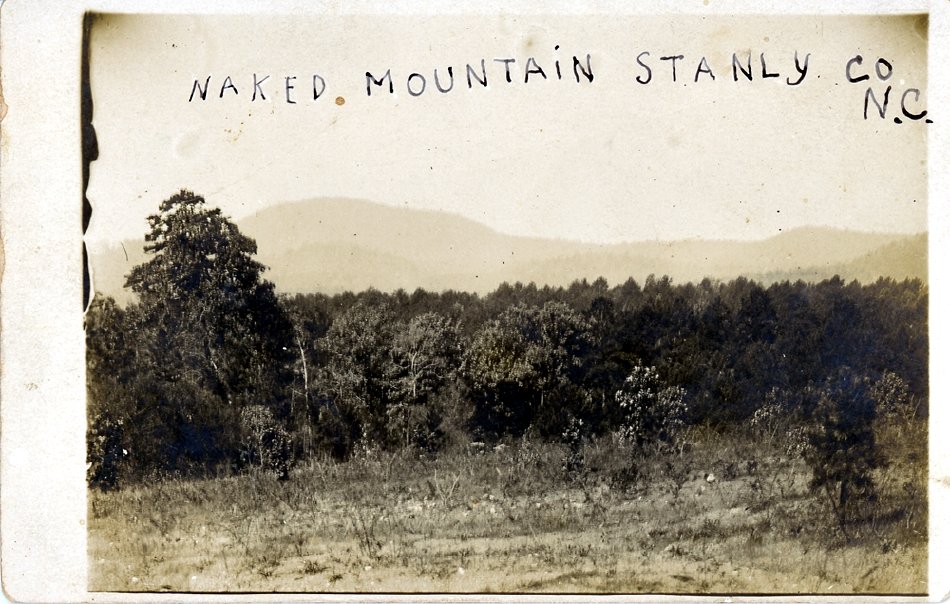

Morrow Mountain State Park | NCpedia
A view of Morrow Mountain before he put on his clothes

Vashi's father Job Calloway wrote his will in 1837 and mentioned Vashti. He mentions first his beloved wife, Susannah, but doesn't name her. He names his oldest daughter, Mary McLester. Then:

"I give to my second eldest daughter Vashti Morton property to the amount of seventy dollars which property she has got.." This is the same phrase he used for Mary and then in the 5th line, for his oldest son Isaac. He states that the "above children" were not to recieve anything more until the other children recieve value of at least $70. He requested 70 acres of land on the Yadkin River be sold and then "400 acres at home" be priced at $2 an acres and that " my four boys younger than Isaac", buy the same and pay the estate as they come to 21. He names the 4 younger sons " viz- Elmore, John, Agrippa and Alfred." He goes on to mention all of his younger children to participate in the division of the remainder of the estate, but did not name the younger, unmarried daughters, Martisha, Sarah, and Kassandra.


Name:Danl P Morton
[Saml P Morton] 
Home in 1840 (City, County, State):West Pee Dee River, Montgomery, North Carolina
Free White Persons - Males - 15 thru 19:1 Steven
Free White Persons - Males - 20 thru 29:1 Unknown, Farm hand perhaps
Free White Persons - Males - 30 thru 39:1 Sammy
Free White Persons - Females - Under 5:2 Adeline, Susan Jane
Free White Persons - Females - 30 thru 39:1 Vashtia
Persons Employed in Agriculture:1
Free White Persons - Under 20:3
Free White Persons - 20 thru 49:3
Total Free White Persons:6
Total All Persons - Free White, Free Colored, Slaves:6


By 1840, oldest son, Steven, had been joined by 2 little sisters: Adaline and Susan Jane. Vashti would have been heavily pregnant with Wincy Elizabeth, my 3rd Great Grandmother, or either she was just missed being a newborn.

Wincy would be followed by 3 more siblings, 1841 - George Arnold, 1842 - Mary and 1846 - Sarah.


Vashti would die at the young age of 33, supposedly in childbirth. She was one month from her 34th birthday and the date was Oct 27, 1846. According to family legend, the child was buried with her.


Graveyard Island
Photo of Graveyard Island Graves from Find-a-Grave

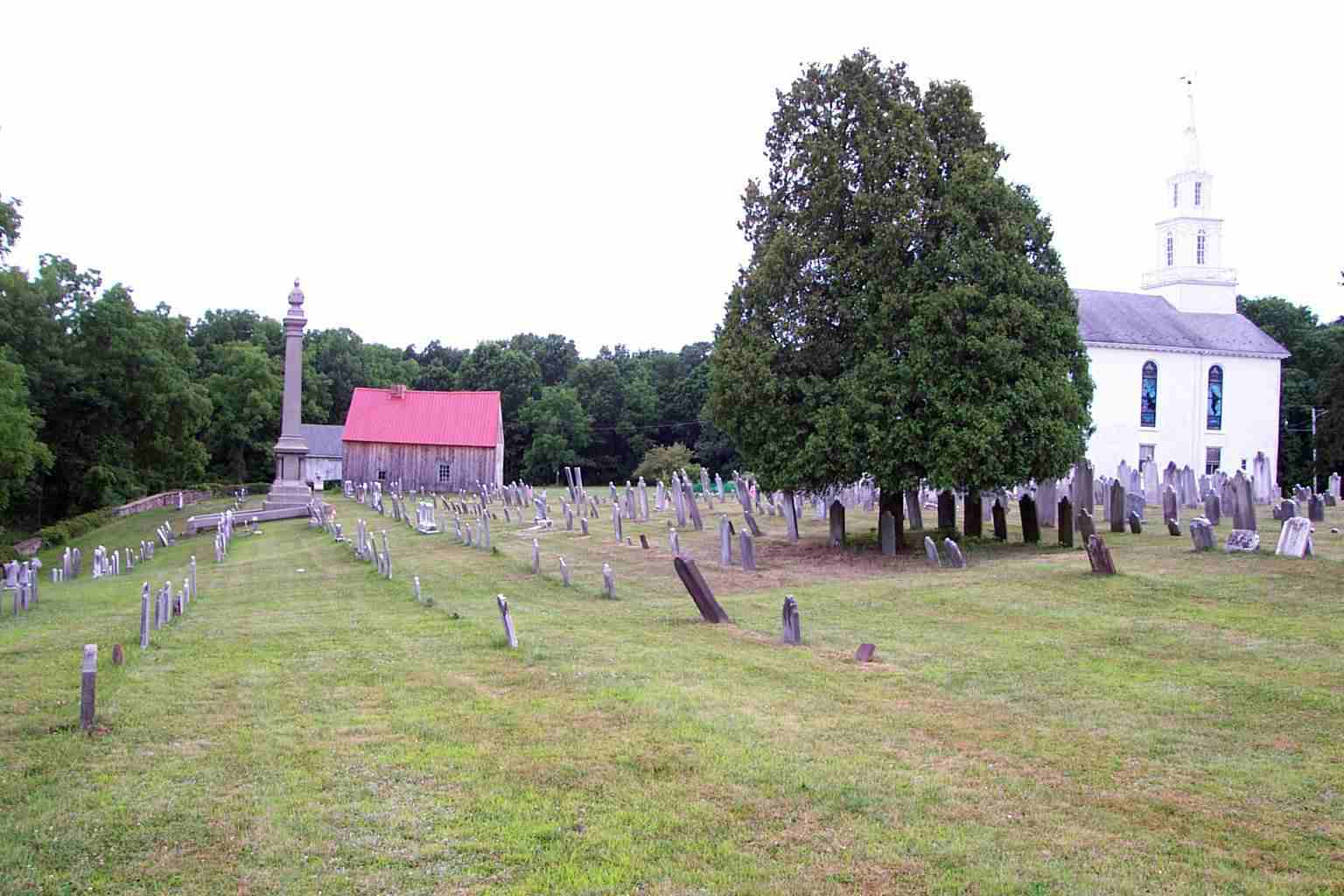
Vashti was originally buried in a cemetery that no longer exists. Around 1917, during the daming of the Yadkin River, several cemeteries that were lying in areas that were going to be flooded during the creation of Badin Lake , were moved to higher ground. "Higher Ground" became an island. Over 400 of the graves are unidentifiable. Vashti's is one that is.

The book, "These Hallowed Grounds",  published by the Stanly County Genealogical Society, has the following to report about Graveyard Island.

"Graveyard Island or Big Cut Cemetery is a cemetery located on an island in Badin Lake between Palmerville and Old Whitney. This cemetery was made by Alcoa to use for the transfer of bodies from cemeteries that would be covered by water after  Badin Dam was built. The island is set up in three sections.Cemeteries moved from Stanly Co. were Kirk-Nash Cemetery, Locke Cemetery, Narrows Cemetery, Pennington Cemetery,Vashti Morton Cemetery, and Jones or Locust Cemetery. Cemeteries moved from Montgomery County were: Coggin Cemetery, Chisholm Cemetery, Forney Cemetery, Cranford Cemetery, Sammy Talbert Cemetery, James Elliott Cemetery and Simmons Cemetery. Grave were also moved from these cemeteries from other counties: Arey, Bruner, Jonathan Conger, Black cemetery (unknown name), Ebony, Elliots Grove, Elliott James, Ellis Family, Elliott-Taylor, Gideon Bean, Samuel Hall, Samuel Hall (black) Holmes, Mears, Pear Tree Hill, and Samuel Taylor. .....


24 marked stones      99 unmarked stones   7 other possible graves......

*Note: Graves 1 - 6 moved from Locke Cemetery     Graves 7-13 moved from Kirk - Nash Cemetery
Graves 14- 17 moved from Morton Cemetery    Graves 18 - 20 moved from Pennington Cemetery
Grave 21 moved from Simmons Cemetery."

That was the first section, there are 3. The second section has 10 rows and 30 to 38 graves in each row totalling 409 graves. The third section holds only one identifiable grave.

After Vashti's death, her widower would marry Lucy Ingram in 1848, and father two more sons, Louis and James W. I don't know a great deal about Lucy, but most people have her as the daughter of Kinchen Martin and Chloe Hough Martin, and a widow of a Samuel Ingram. As there are several Ingrams mentioned in the early records of Ebenezer Church, it may have been that set of Ingrams Lucy was from, or married into.


Trading Ford | NCpedia
A Lower View of the Narrows


Excerpt from 'The History of Anson County" by Mary Louise Medley

'A contemporary of Freeman and the Ratliff preachers was Samuel P. Morton known as 'Crying Sammy Morton'. An emotional type, he was given to shedding tears from the pulpit. Deacon Uriah Staton, large landowner of the Rocky River section and  a leader in both the first church there and a later one at Red Hill, usually went to sleep when Uncle Sammy preached. When asked about this he is said to have replied, "I know I can trust Uncle Sammy, but a stranger I have to watch'. Morton was born in Stanly County in 1805 and lived near Badin. He was an earnest, good man and filled with the spirit, and lived a meager life, bordering on poverty. He requested that the words on his tombstone be 'S. P. Morton A Sinner Saved by Grace.' What he lacked in colorful revival tactics, he made up in sincere good work. He converted and baptized many people during his ministry. '


Note: The present town of Badin did not exist during the lifetime of Sammy Morton. What the author meant was he lived in the area of the present town. Ebenezer Baptist Church, now Badin Baptist, did exist and in it's cemetary is buried the father of Sammy Morton's first wife, Vashti Calloway, Job Calloway. Vashita Calloway Morton's grave and the homestead of Samuel P. Morton at the time was in the path of the expanding waters of Badin lake during the Dam construction era. Vashti's grave, with many others, was relocated to one of the Graveyard Islands near Tuckertown Dam. Sammy and his second wife, Lucy Ingram Morton, are buried at Red Hill Baptist Church in northern Anson County. 
Posted by Myself, on ancestry.com, some years ago.


Happy Mother's Day, Grandma Vashti, my 4th Great Grandmother!

In a World of Mary's and Sarah's, let's all be a Vashti!


The name Vashti is a girl's name of Persian origin meaning "lovely". This Persian name with an Old Testament pedigree has a warm Sasha-like feel. The Biblical Vashti was a queen who refused her husband's orders to appear naked in front of his party guests and so was deposed in favor of Esther.  

From Google Search


Saturday, May 9, 2020

30 Mothers in 30 Days: Catherina


On September 10, 1731, a ship arrived in Philadelphia, Pennsylvania from Rotterdam, Netherlands called "The Pennsylvania Merchant".  Commanded by Captain John Stedman, the ship carried 175 imported passengers, among them 57 Palantine passengers and among them my Moll (or Muehl or Mull) ancestors. Aboard was Christophel Moll, Rosian Moll, Johan Michael Moll, Margarite Moll, and under 16 were two children, Conrad Moll and another Margarite.


Study in Rotterdam, Netherlands | Study.EU
Rotterdam, Netherlands

Philadelphia was growing in leaps and bounds as a market center and settlers from various parts of Europe were finding a home there. Initially settling in Montgomery County, Pennsylvania, Christophel "Stoffel" Mull hailed from Weisenhelm am Sand, Bad Durkheim, Rhineland-Palatinate, Germany.  His year of birth is estimated between 1700 and 1716. His ship was just one of many, over a course of decades, that would bring German and Swiss immigrants to America, some settling in New York, but many more in Pennsylvania and even at times, into North Carolina. 


Swiss and Palatine Settlers | NCpedia


Two years after arriving to America, Christophel would marry another Palatinian refugee, Analyas Catherina Deihl.  The couple would have 7 children and right in the middle, with 3 siblings older and 3 siblings younger, was Catherina.


Born May 24, 1733 in Goshenhoppen, Philadelphia, Pennsylvania, Catherina would become my 9th Great Grandmother.


New Goshenhoppen - Historical Society of Montgomery County, PA
From the Montgomery County, PA historical society


As in many of my ancestors journeys, theirs also seemed tied to the church. Church, War, Economic upheaval and the search for a good piece of bottomland. That's what drove my ancestors to migrate, move and found America.


Old Goshenhoppen Cemetery in Woxall, Pennsylvania - Find A Grave ...

Not much information exists for Catherina, besides her marriage and the birth of her children. What was life like for a Palantine woman in early Pennsylvania? Hard and teamly with strict religious bearings, from what I can tell. The area was highly Catholic. How did they relate to the arrival of strange Lutherans of a different language.

https://berkshistorymysteries.wordpress.com/tag/goshenhoppen/


That may have been part of the family's removal to North Carolina. By 1753, Christophel had moved his family to Rowan County, NC. A Deed is recorded in Rowan for him in 1753 of 435 acres. Rowan covered a much larger area at this time and this plot was further west and not what we would considered Rowan at this time. Salisbury was the western frontier. Christophel would die in 1802, well into his 80's.

About The Series 'Along The Great Wagon Road' | WFAE
The Great Wagon Road

There is no doubt Catherina and her family traveled down the Great Wagon Trail from PA to NC. It was likely no more than an Indian Path at this time. There was already a steady and consistant population of Germans establishing in the area at this time in around Salem and in what is now Rowan and Cabarrus Counties.

This, my particular set of Germans had decided to settle along the Cawtawba River, west of the Yadkin, and a more dangerous, unsettled area.

Analyas, Catherina's mother, would die on January 16, 1761 in Rowan County. Her children would settle in Lincoln and Burke Counties. It was not that they were scattered miles apart. They would not. It was that over time, the counties would be subdivided and the names of the general area would change. Records for Catherina's husband, George Heinrich Weidner, can be found in Anson, Rowan, Burke, Lincoln and Cawtawba counties. While at times, Henry did move his family to safety due to Indian raids, the general area of his property on Jacobs's Fork and Henry's Fork remained the same.

His first records are in Anson.
1753 - Rowan is created from Anson
1777- Burke is created from Rowan
1778 - For a brief time Jacob's Fork lies in the defunct county of Tryon
1779 - Now their home becomes a part of the new county of Lincoln.
1842- Long after their death, the upper part of Lincoln becomes Cawtawba, so the area they settled is in current Catawba County.


Before they left for North Carolina, Catherina Moll married George Heinrich Weidner at Goshenhoppen Reformed Church in a ceremony conducted by Rev. George Micheal Weiss.


Coburg, Germany | Castle, Real castles, European castles
The Fortress of Coburg

As was common for the times, Catharina would marry young, at 16, to George Heinrich Widener or Weidner. He was an immigrant from Coburg, Sachsen (Saxon), Germany. The date was October 4, 1750. The young couple would follow her family to North Carolina.


Henry, as I shall call him from here forward, was a Saxon. He was born October 9, 1717 in Coburg, Sachsen (or Saxony), Germany. There are rumours that he was of noble birth somehow and that there was a feud among brothers and Henry had to leave Coburg to spare his life. Whether that is true or not, I haven't a clue and would probably doubt it. What is fact, is that he was a Palentine Immigrant and is hailed as one of the founders of Catawba County. With that, because of records available, I agree. He wasn't the only one. There were many others, some his own family, his wife's family and many more of his ilk and strain, who had traveled with him or came shortly after. He certainly contributed.

As per the day, it is easier to find information on Henry and not so much on Catherine, because she was a woman. It's also difficult to take a series of facts, presented over time by several different persons, in an original way.

Among the sources include:
Catawba Cousins Vol 14 No 4 Page 16 Dunkers and Sabbatarians in South Carolina
by Max Emery Miller, who claims Henry Weidner (later Whitener), was from a Dunker family affiliated with the Ephrata.


photo2.jpg - Picture of Ephrata Cloister - Tripadvisor
Ephrata Cloister in Pennsylvania


I had to look that one up. It was a Religious Sect that began in Germany and flourished around Lancaster County, Pennsylvania. Below is a link to the Wikipedia page. The last resident of the Cloister eventidentally died in 2008, at the age of 98.


https://en.wikipedia.org/wiki/Ephrata_Cloister

George and Catherina and their family were instrumental in founding the town of Hickory. It's said that his brother-in-law, Henry Robinson, had built a tavern under a large Hickory tree, and that is where the place got its name.

In Rowan County Court of Pleas and Quarters, Book 16, we find where Henry Whitener came into open court and applied for Naturalization. He was the only one of his brothers to do so. Henry was a Patriot. In 1781 a meeting was held at his house in which Colonel McDowell of Mecklenburg convened the militia officers to raise supplies. Vouchers for Henry's contributions are in the Revolutionary War archives. He was, by then, too old to serve in the army itself, but he did his part by supplying goods and implements. He is listed, however, as a Captain in 1784, when a militia unit was formed, comprised of men from the area that is now Catawba County.


Name:Henry Whitener Junior
[Henry Weidener (Whitener) Sr.] 
[Hines Whitner Junior] 
Home in 1790 (City, County, State):Lincoln, North Carolina
Free White Persons - Males - 16 and over:1
Free White Persons - Females:2
Number of All Other Free Persons:10
Number of Household Members:13


In the 1790 census, Henry is listed as Head of Household with 2 women in the home, probably Catherina and his unmarried daughter, Mary Ann.

Catherina served as hostess to a continued migration of Germans from Pennsylvania to North Carolina. It is recorded she and Henry hosted the families of George Wilfong, Conrad Yoder, Michael Weidner, Jesse Robinson, Conrad Hildebrand, and many others, until they could build lodging of their own. The inland road into the county from Sherrill's Ford was known as the road to "Father Weidners" on maps and court records.


George Heinrich and Maria Catherina Muehl Weidners children had Anglicized their surname to Whitener. Catherina's maiden name had changed to both Moll and Mull, depending on where their descendants traveled. Sometimes Weidner would be seen as Widener, instead of Whitener. A matter of accent, I suppose.


Catherina (Mull) Weidner (1733-1804) | WikiTree FREE Family Tree
Tombstone for Catherina Muehl Weidner

There was trouble with Indians, as with all frontiersmen. Henry would send his family to safer accommodations several times during the years, reflecting the tension between Indigenous and Immigrant at the time and reflected in the places of birth of their children, who were:


1) Daniel Whitener b 14 Oct 1750 d 8 Jan 1833 Lincoln County. It is said Daniel was the only child born in PA and that Henry had first come down with his gun and his dog, and a small band of men, including brothers and brothers-in-law, leaving Catherina home in the safety of PA at the time because she was in the last months of maternity. The date of his first deed in Anson County (current Catawba), Caterina would have been 7 months pregnant. Daniel lived to be 82.

2) Captain Henry Whitener b 1752 Lincoln County d 1811 Madison County, Missouri, aged 59. He inherited his father's wandering gene.

3) Abram (or Abraham) Whitener b 1754 Anson County (calculated as the part that would soon become Montgomery.  Died 17 Oct 1781 Kings Mountain, North Carolina, age 26.

4) Catherine Whitener II b 1756 Lincoln County, NC d 1838, Same, aged 82. Married cousin John Mull.

5) Barbara Whitener b 1760 Lincoln County d 1840 Catawba County, age 80. Married John Phillip Dellinger.

6) Molliana Whitener b 1763 Mecklenburg County, NC d 1799 Lincoln County, NC age 32 Married Jesse Robinson.

7) Elizabeth Whitener b 1 Jan 1764 Lincoln County, NC d 21 Oct 1827 aged 63. Married George Summerow or  Summerour. My Line.

8) Mary Ann Whitener b 31 Mar 1765 Anson County, NC d 11 Aug 1837 Lincoln County, NC aged 72. Married Lightfoot Williams.


The Whitener/Widener Spread was a substantial one. Henry's first grant was one of 1000 acres on the west side of the South Fork of the Catawba. He would eventually recieve grants of 2840 acres.


Henry Weitiner's North Carolina land platted by Kathy Gunter Sullivan.


1750 is pretty much settled as the year the family left Pennsylvania for the journey to the Catawba Valley. Henry witnessed the marriage of a kinsman, Tiars Weitner in Philadelphia in May 15, 1750.

In August of 1750, he and Catherine, included, executed a deed in Lancaster County, PA, conveying land that belonged to his Mom, Catherine Schneider Weidner. They were selling for the journey.

In the account book of one Abraham Bertolet, a blacksmith in Oley Township, is recorded that in 1750, he fortified Henry Weidner's wagon with 437 lbs of iron, including a strong tongue and a number of farming implements. He was about to set out on the journey, which would have taken an average of 3 months.


Weidner--Henry--Land%20Record--Anson--March%20 - 1751
First Deed in Anson

The Weidners did not always have trouble with the Indians. The Cherokee Cheif, named Wauhatchie, had helped the colonists in the French and Indian Wars. Army officers would be assigned to escort the tribe from Virginia to the Cherokee Nation. In July of 1757, Dr Andrew Cranston and others had traveled with the tribe from Fort Dobbs, in Iredell County near Statesville, to Captain Henry Weidners. On July 8, Henry certified that the Cherokee had arrived at his home with a group of 200 men and 8  horses. In the days between July 8 and September 3, he went with them to the Lower Town settlements in Northwest South Carolina. It was a 20 day round trip. He supplied the Cherokee with a fat beef cow, 200 lbs of wheat, a buckskin vest and a horse that got loose during the journey.

Catherina must have been very afraid during the times Henry was absent. They had not a fort nor an army at their beckon call. Only a handful of related settlers lived on the creeks and their properties were substantially spaced apart. And the Cherokee would not remain peaceful.

On May 4, 1759, Nathan Alexander, another kinsman of mine, wrote to the South Carolina Governor, William H. Littleton that "the Indians supposed to be the Cherokee did on the 25th and 26th days of April last murder and scalped three white persons on the Yadkin River and 8 persons on 4th Creek and 3 persons on the South Fork of the Catawba (The location of the Weidner family), which has put all our frontiermen in sad confusion." This caused several of the settlers to return to safer ground, some east into the Carolina coastal plains or south into the more settled areas of eastern South Carolina and Georgia, and even back North to Pennsylvania or the Shenandoah Valley of Virginia.

In 1790, precluding a will, Henry Widener executed a series of deeds to his sons, sons-in-law and to his youngest, unmarried daughter, Mary Ann. The following is the deed intended for their daughter, my ancestor, Elizabeth, who married Henry Summerow.

June 11, 1790, Lincoln County Deed Book 15 Page 363.

Several books, blogs and articles have been written on my ancestors, the Wideners, Molls, and Summerows and the associated families. I will include links at the bottom of this blog.

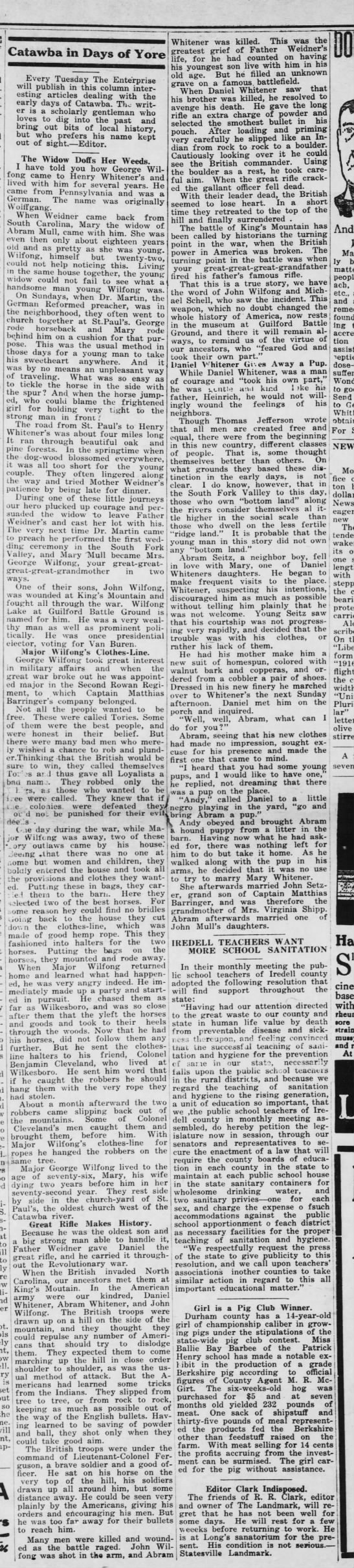
Heinrich Weidner and Maj Wilfong History to include the Battle of Kings Mountain -
The Newton Enterprise
Newton, North Carolina
19 Jan 1917, Fri  •  Page 3


The will of Henry Weidner/Whitener


This page explores the Saxon origins of both the Weidner and Summerour (Summerow) families from which I descend.

http://americanpatriotsandfounders.weebly.com/the-saxons-the-whitnerweidner-summerour-and-wininger-family-history.html

The Yoder family was an associated family, neighbors and close associates of the Weidners.

https://www.yodernewsletter.org/YNCBOOK/Y1JOHN.htm


This blog post is on the cemetery and German markers

https://heritageramblings.net/tag/whitener/


Catawba County History

https://archive.org/stream/sherillshistoryo00sher/sherillshistoryo00sher_djvu.txt


The book "Through Four Generations" on the Weidner/Widener/Whitener Family


f http://www.hartshorn.us/Weidnerbook.htm

DAR Page on Fold3 for Henry Whitener

https://www.fold3.com/page/641396816-captain-henry-whitener/stories


Rootsweb Page

https://www.genealogy.com/ftm/w/i/l/Robin-S-Wilson/BOOK-0001/0013-0001.html

Blogpost About the Family

https://arrowoodpigeonroostnc.blogspot.com/2010/01/stacked-stone-chimney.html


The Will and Epitah of Henry


Althought enumerated in the NC census as Whitener, he is buried under the name of Weidner
In the name of God, Amen! The seventh day of December in the year of our Lord, 1790, I, Henry Weidner, Sr., of the County of Lincoln, in the State of North Carolina, planter, being sick and weak in body but of perfect mind and memory, and calling to mind the mortality of my body, and knowing that it is appointed for all men to die, do make and ordain this my last will and testament, in manner as follows. That is to say, in the first place, I give, devise and bequeath unto my well beloved wife Catherine, a Negro wench named Phyllis, one hundred pounds in cash; her bed and furniture, a horse and saddle and spinning wheel, her privilege in the ,Manor house and all the household furniture while she remains single and no longer. I give unto my son Daniel three Negroes, vis: Kingston, Tom’s son Pelt and old Tom. I give unto my son Henry five Negroes, vis: Henry, Pete, Pleasant, David and Nancy. I also will that my said two sons Daniel and Henry have all my iron tools and utensils of husbandry, equally divided between them, Daniel to have the first choice and Henry the second and so to continue by choice until they have the whole. I give unto my daughter Mary, five cows, a Negro wench named Fanny, and her bed and furniture. I give unto my daughter Catherine, wife of John Mull, a Negro wench named Nanny. I give unto Barbara, wife of John Dellinger, a certain debt of seventy-five pounds. I give unto my daughter Elizabeth, wife of Henry Summerrow, a debt of seventy-five pounds. I likewise give unto my daughter Mollie, a certain debt of sixty-six pounds my two stills and all the still vessels and a horse now in her possession. I also will that if any or part of my moveable estate not particularly disposed of should remain in the hands of my executors, it shall be equally divided among all my children, male and female. I also give, devise, and bequeath unto John Dellinger, Jr., Joseph Dellinger, Catherine Dellinger and Barbara Dellinger, the children of my son-in-law, John Dellinger and his wife, my daughter, Barbara, that certain tract of land whereon said John Dellinger now lives, situated on Jacob’s Fork, being a part of sundry surveys and containing by estimation 400 acres, be the same more or less. And lastly I make, nominate, constitute and appoint my loving and dutiful sons, Daniel and Henry Weidner, my whole and sole executors of this my last will and testament, ratifying and confirming this and no other to be my last will and testament. In testimony whereof I have hereunto interchangeably set my hand and affixed my seal, the year above written.
Henry Weidner (Seal)
Signed and sealed by the testator, as and for his last will and testament, in the presence of us, who were present at the signing and sealing thereof.
Robert Blackburn
Michael Shell
John (X) Mull
  His epitaph as found on the tomb stone in German:
Yensiel dem kleinen straum auf dem Hurglein, id, ein Graub und das Grash ist ge marked mit einen Haupstein, stehl is greachricben: Heinrich Weidner war gebohren in yahr1717, and gesturbenin dem yahr 1792 om ueinten October, muchten allen seiner tagen auf arden 75 yahren, Frieden saseinen ashen.
Translated: Beyond this little stream on yonder hillock is a grave, and that grave is marked by a headstone and on that stone it is written or engraved: Henry Weidner was born in the year 1717 on the 9th of October, and died in the year 1792, on the 31st of July, making all his days here on this earth seventy-five years. Peace be unto his ashes.
 From http://stacygenealogy.com/ghtout/pafn32.htm#867


,

The Baptism Record of Maria Catherina Muehl (later Weidner)
She was born Catholic but later joined with her husbands church.


An excerpt from Catherina's Will.


1804 Catharina (Mull) Whitener's Will and Estate

According to her tombstone, Catharina (Mull) Weidner died 26 August 1804, having survived her husband twelve years. Lincoln County court minutes document that she made a nuncupative (oral) will that was presented by Daniel “Whitner” at October 1804 court sessions. The minute entry states that a copy of her will was annexed (attached) to the administration bond and filed in the county clerk’s office. At some point thereafter, someone removed the memorandum from the courthouse. Daniel Whitner was appointed administrator and executed the administration bond of £500; Jesse Robinson signed as security. The administration bond survived and is available at the North Carolina State Archives.[54]
Catharina’s estate papers also were removed from the courthouse, but extant Lincoln County civil action papers document that as late as April 1806, probate of her estate was still in progress because of a debt of £40.12.6 due her from John Dietz.[55]
A transcript of the memorandum of Catharina's nuncupative will appears in Vance Whitener, “Father Weidner: The King of the Forks,” p. 19, an unpublished manuscript dated 3 January 1916. Mr. Whitener does not reveal where or how he acquired the will memorandum.
The Will of Mother Weidner
Memorandum of the nuncupative will of Catherine Whitener, Widow, of Lincoln County, in the State of North Carolina, now deceased is as followeth: - On or about the 7th of August last, she being then in her last sickness, she then sayeth & pronounced, after her death her money to be equally divided amongst her sons and daughters. And her negro woman, Phylis – Catherine Yoder, wife to Jacob Yoder, is to have her. And all her clothing is to be devided equally among her daughters, and her spinning wheel to be fore Jacob Yoder’s two twins. The above was said by the said Catherine Whitener in the presence of us Jesse Robinson and Richard Johnston who were requested by her to bear witness thereunto, as witness our hands and seals this 26th day of September 1804, Jesse Robinson, Richard Johnston.
Lincoln County, October Sessions 1804} The above was proved in the Open Court and recorded. Witness:
- WikiTree for George Heinrich Weidner. Many contributors, unnamed.

Mappy Monday: Catawba County NC and the Weidner Homestead ...
Site of the Weidner Homestead


Rest in Peace Grandma Catherina. Your place in history as a North Carolina frontier woman is solidifed.