Showing posts with label Wilkes County. Show all posts

Sunday, August 30, 2026

30 Fathers in 30 Days: Job Calloway


The Biblical character of Job was a long-suffering, but faithful believer in God, never swaying from his convictions, despite what tragedy, loss and illness befell him. A dejected and miserable individual to say the least.  


The etymology of the name Job sources an original word for father, but that which had evolved into 'the persecuted 'or, 'one who suffers'. It doesn't sound like an optimistic name to lay upon a child. Yet, I ended up with two, at least, Fifth Great Grandfathers named Job. Both were born in the later decades of the 18th century. Why had their parents given them such a sorrowful name?

In the case of Job Calloway, (1790-1835), son of Isaac Calloway (1750-ish to after 1810), he was named for an uncle, brother of Isaac, who had kept moving southward and ended up in Georgia. From what I can tell, neither of their lives was as terrible as that of the biblical Job. 

I have posted on Job Calloway before, but not in great detail. See the link below.


The Setting of the Son: The Will of Job Calloway

The Calloway or Callaway surname is Norman in origin, and comes from the French "Cail", meaning pebble, or pebble-way. It's a place name, referring to a family from Caillouet-Orgeville in Eure, France, who later migrated to Dorset. 

Village of Origin shown in red

Our line began with a Peter Calloway, in the village of Marnhull, Dorset, England. His son, Peter II, was born there around 1640. Peter II indentured himself for passage to America. According to "Callaway Family History 1630-1898"  compiled by Robert Ellis Colson, Peter bonded himself to William Pressley for payment of passage and arrived in Northumberland County, Virginia where he worked for seven years. Fifteen years later, he would relocate across the Chesapeake Bay and settle near the Wicomico River in Maryland and worked as a Carpenter on his 50 acre headright until March 26, 1667.

On that date a girl named Elizabeth Johnson, daughter of John and Susan  Johnson, was brought to court on a bastardy charge and named Peter Callaway as the father of her child. Peter was fined 1000 lbs. of tobacco and Elizabeth was fined 500 lbs. Peter was also to pay Elizabeth 100 lbs. of tobacco, the current currency in the Quaker era court.

Peter and Elizabeth avoided further prosecution by making their relationship legal and married on March 26, 1667, in Princess Anne, Somerset County, Maryland.  He had arrived as a very young man, possibly a teenager, around 1649. He and Elizabeth raised their family of 11 children in Somerset, Maryland, where Peter died in 1719 at age 81. The children of this couple were part of a very mobile generation of young Americans who migrated into Virginia, North Carolina and later, Georgia.

Among those 11 children, was John Callaway or Calloway, the spelling being interchangeable. John was born about 1685 and married Mary Gould, daughter of Edward and Francis Gould on Christmas Day, 1709, in Stepney Parrish, Somerset County, Maryland.

John was a Cooper by trade. Peter had been able to build his wealth in Maryland and owned numerous tracts of land, the true American dream. John inherited some of this land and added to it himself. His collection of properties were given names. In various patents, lists and rent rolls they were known as Callaway's Folly, Callaway's Chance, Callaway's Hard Fortunes, Callaway's Venture and Venture Still. His extensive properties extended into Delaware.


Johan and Mary had  a family of nine children four sons and five daughters. Mary died before John, but John lived a long life, to age 85,  surviving all of his children except one, son Ebenezer. The oldest of these nine was a son named Edward, our line.

Edward Callaway was born in 1711 in Somerset County, Maryland and became a wheelwright by trade, and a farmer. He was my 7th Great Grandfather making John my 8th and Peter my 9th. Edward married around 1734 to Elizabeth Anderson. His first purchase of property was in Somerset County, Maryland consisting of 50 acres of land between Wicomico River and Broad Creek, an estate known as "Ryan's Grave". How outré' and ghoulish. They remained there for about a decade or more, before moving to Sussex County, Delaware in 1745, and purchasing 200 acres in Cedar Creek Hundred. While in Delaware, he purchased a 216-acre tract called 'Battle Green'.

Edward was like a worm in hot ashes. After another decade, in 1755, he sold his old plantation called Ryan's Grave in Somerset, and four years later, in 1759, he moved the family back to Maryland, this time settling in the less populated Worchester, Maryland. Somerset and Cecil were filling up and had been for over a century. Edward was the ancestor who brought the Callaway's to North Carolina. In 1760 he sold the Cedar Creek property and in 1763, he sold Battle Green. He was on his way to Onslow. 

On December 7, 1765, two years after the Battle Green sale, Edward Callaway had a survey of 300 acres on the White Oak River in Onslow County, North Carolina. Edward lived five years after moving to Onslow, passing in 1770. 


White Oak River forms the Northeast border of Onslow


Isaac Callaway, my 6th Great Grandfather, son of Edward, was born around 1750 on the Ryan's Grave homestead in Somerset, Maryland and moved with his family to Onslow County. After Edwards death, the family was again on the move. They sold the property in Onslow and moved to what was then Anson County, North Carolina.


While in Onslow, the Calloway's lived near a man named Peter Arnold. Isaac would marry his daughter, Elizabeth. The Arnold's also relocated to Anson County. This was usually done in groups of neighbors and relatives. 


Elizabeth, Edward's widow, moved with her sons to Anson County, and settled along Mountain Creek in what is now Stanly County. About ten years later, four of her five sons would again migrate to Wilkes County, Georgia. Most of her sons, including Isaac, would serve in the Revolutionary War. Some folks have the War record of Isaac's brother Job, attached to my ancestor, Job Calloway. This is incorrect. Our Job was too young. That record belongs to his uncle Job, son of Edward. Elizabeth Anderson Callaway died in Wilkes County, Georgia sometime after their 1784 move. The five sons of Edward and Elizabeth Arnold Callaway were:

John who married Bethany Arnold

Job who married Mary

Isaac who married Elizabeth Arnold

Joseph who married Sabrina Morgan and Elizabeth Lee

Joshua who married Isabell Graves Henderson.

Some of the weddings took place in Onslow County, and others in Stanly (Montgomery/Anson).

Isaac was the only brother to remain in North Carolina.

Calloway Plantation House, Wilkes County, Georgia


Isaac Calloway

Isaac Calloway. my 6th Great Grandfather is first seen in the 1770 tax record of Onslow County, North Carolina. 


Isaac entered a grant of 100 acres on Mountain Creek on the southwest side of the Yadkin River on November 22, 1779. Chain Carriers were Joshua Carter and Isaac Calloway. 


Isaac would settle in Montgomery County, NC, which would have been part of Anson prior to 1779. He received a grant in Montgomery County, on the southwest side of the Yadkin River, on the south fork of Mountain Creek. Along this creek is where Job was born, lived, raised his children, and died.


In the first census of the USA, Isaac is shown heading a household of ten, one male over 16, four under, and five females. 

NameIsaac Callaway
Home in 1800 (City, County, State)Montgomery, North Carolina
Free White Persons - Males - Under 101
Free White Persons - Males -10 thru 152
Free White Persons - Males - 45 and over1
Free White Persons - Females - Under 104
Free White Persons - Females - 10 thru 151
Free White Persons - Females - 26 thru 441
Number of Household Members Under 168
Number of Household Members Over 252
Number of Household Members10


In 1800, Isaac was still heading a household of ten. A male over 45 would have been himself, with his wife, Elizabeth Arnold, the female between 26 and 44. He had two boys between 10 and 15 and one under ten in the home and one girl between 10 and 15 and four under ten. 

The list of children I have of Isaac Callaway and Elizabeth Arnold are:

Bethany Callaway - Married David Kendall.

Isaac Callaway Jr. - Married Mary Barrett and relocated to Wilkes County, Georgia with his uncles.

David Callaway - Married Judith Tillery and relocated to Wilkes County, George and later to Madison County, Florida.

Elizabeth Callaway - Married Richard Stoker

Job Callaway - Married Susannah Randall

Sarah Callaway - Married John Randall 

Anne Callaway - Married James Colby Randall.

Eunice Callaway - Married Burrell Willis Coggin, moved to Dekalb County, Tennessee.

Vashita Callaway - Married John Parker.

John M. Callaway - Married Elizabeth Smith and secondly, Lucinthia Ingram.


Above, a record from the Arnold family website showing descendancy of Eunice Ann Callaway Coggins.


Job's father Isaac was the only Calloway in Montgomery County in 1810. He was in Captain Kirks District, near Kirk's, Carters, Safley's and Jones, which put him on the west bank of the Yadkin River in the Mountain Creek area. Isaac had accumulated 600 acres on both sides of Mountain Creek by 1800. He would later add a 150-acre tract. 

Isaac would serve in the Revolutionary War as a soldier from Montgomery County. After the War his brothers and at least one sister relocated to Georgia. Two of Isaac's sons would go with them, Isaac Jr. and David.

Isaac died after the 1810 census.  His estate wasn't settled until after the death of his widow, Elizabeth. Elizabeth Arnold Callaway was listed as a member of Rocky River Church in 1828, and her grandson in law, Samuel Parsons Morton, would be a minister there in later years. 

Elizabeth died on June 30, 1834 and Isaac's estate was settled during the 1836-1837 period. Both are buried at the Palestine Community Cemetery near Mountain Creek between Albemarle and Badin, which began as the Callaway Family Burial Ground. 

Job

My 5th Great Grandfather, Job Calloway " Isaacson," was born between 1785 and 1790 in Anson County, North Carolina. There must have been a very early ancestor in Peter's line named Job, as the family seems to have left a trail of Jobs everywhere they had settled. When my Job appeared in the Montgomery County, NC census, there was also a Job Calloway in Somerset, Maryland, where his family had come from, and another in Wilke's County, Georgia, where some of his father's brothers had pushed on to. This would have been his uncle.


Above, the family of Isaac's brother, John, who also named a son Job. Note: he was not born in Bedford County, Virginia. His parents were clearly in Maryland the year he was born. He may have removed to Bedford as a young adult, and there are records of him in the same area as Isaac in Anson/Montgomery (Stanly) County before he migrated to Wilkes County, Georgia.


The above record for Job Calloway from 1783, would have been lost if it had not been presented and proved later on in Stanly County in August 1851, most likely by the Moss family. The Carr and Bankston family were very early inhabitants, or owners, of land in what is now Stanly County, but their names are not familiar in more modern records because they did not stay. This was not my 5th Great Grandfather Job, as he was not yet born, but his family was, showing he was born here, along Mountain Creek. This Job would leave the area for Georgia.

Above, 400 acres on the lower side of Rock Hole Creek is referenced as being next to Andrew Bankston and Robert Carr, and a second 87 acres next to Job Callaway "being part of Carr's tract". 


In 1771, Stanly was still part of Anson as Montgomery had not been formed yet. Courts were few and far between. When Jacob and Job Calloway, along with Robert Carr and others, were ordered to lay the road from Edward Moore's store on the Yadkin River, they were referring to land in present Stanly County, probably near the Mountain Creek area where the Callaway's lived to the river, above the mouth of the Uwharrie. There was an early village in Stanly County called Narrowsville, named for the Narrows of the Yadkin River. It did not appear to be located right upon the river, but a short distance from it. The Salisbury Road is shown to have run, in another old map, between Mountain Creek and the river, and crossing the river, or ending at it, just below the mouth of the Uwharrie, (on the eastern bank of the Yadkin, across from the site of the old town of Henderson. Near the top of the map, another road veers off the Salisbury Road, and ends at Stokes Ferry. This would, of course, have been the Stokes Ferry Road, south of Ryals Creek. Narrowsville must have stood near this road, somewhere just west of the Narrows. There are a few names listed on the map, with one of them being Carters, on the Salisbury Road, near the headwaters of Mountain Creek. I believe the Calloway's probably lived in the vicinity of the Carters.


An old newspaper article from 1804 tells of a John Moore living on Mountain Creek, along with Luke Marbury on the same creek. He could have been a relative of Edward Moore.


As his father served in the Revolutionary War, Job put in his service in the War of 1812. The records describe him as being 5 foot 10 inches tall, with grey eyes, dark skin and dark hair. He received 100 acres on the Yadkin River in 1814 for is service, according to


Job only appears in one census, that of the 1830 in Montgomery County. He was probably also in the 1820 as Head of his own household in 1820, but that document was destroyed. He married Susannah Martisha Randall or Randle sometime soon after 1810, the daughter of Colby Randle and Lettie (Short for Letitia) Elmore. 
I have also posted on Colby Randle in this series on fathers 

Job and Susannah also settled along Mountain Creek and raised their family there. He inherited 64 1/2 acres from Isaac Callaway.


By 1830, Job was heading a household 11 people. He is shown as a man in his 40's, as was Susannah. There was a boy between 15 and 19, two between 10 and 14 and two under 5. Likewise, there was one female 15 to 19, one 10 to 14, one 5 to 9 and one under 5. This would record would have included all of his children, listed below, with the exception of the last, Matisha Callaway Kendall.


Job's neighbors in 1830 included Kinchen Pennington, John Fulchs (Folks), Timothy Ragsdale, Ethelred Morris, Thomas Rice, Howell Parker, J. Thomas Moss, Annis Carter, Cecily Fulchs and Daniel Kirk.


Archibald Smith, Fred Hinson, Joseph Ingram and William Jones.

Job, like his father, would build his wealth and land holdings over his lifetime, which wasn't long, but long enough to do so. 


On October 12, 1814, 60 acres was granted Job Calloway on the southwest side of the Yadkin River, meeting the properties of Letty Randle, his mother-in -law, and Francis Locke, who lived near Locke Mountain near the Narrows. Chain carriers were John Forrest and Jonathan McDonald.


There was an additional grant entered on the same day for 20 acres, always connecting to both Letty Randle and Francis Locke. This time Charles Jones and Jonathan McDonald were chain carriers.


Job and Susan Callaway were at times members of Rocky River Baptist Church across the Rocky River in Anson County. At other times, their church membership was at Kendall's Church in the Kendall Valley along the Salisbury Road.  It was obvious they were of a primitive Baptist ilk. In Mr. Colson's Calloway book, he states that Job and Susannah lived in "what is now the Davidson Talbert Place" three miles north of Albemarle. He also recounts a story concerning Job Callaway and his church attendance. 

"On the Saturday before the fifth Sunday of May 1830, Job rode to the Rocky River Church to ask that Kendall's Church be constituted as a regular church. Kendall's was only a few miles from his home.....There is some speculation that the Callaway's had a falling out with the Rev. Sammy "Crying Sammy" Morton at Rocky River Church.'


Job Calloway did not live to be an old man, despite some folk's opinions on the contrary. I will get into that later. He was born around 1790 and died in 1837, making him about 48. Above is a court record from 1838, where his will was offered for probate by evidence of Samuel P. Morton, his executor, son- in- law and my 4th Great Grandfather. 


The above transaction between Samuel P. Morton and his brothers-in-law's, Isaac Calloway, Alfred Calloway, and Agrippa Calloway, took place during the division of property of the Calloway estate. Isaac, the son of Job, is not to be confused with his uncle, Isaac Jr. the brother of Job, who went to Georgia with his uncles.


The division and swapping of properties among the heirs of Job Calloway continued nearly a decade after his death. The above deed references a 200 acres tract on Long Creek, not in the typical area of his abode, crossing a branch referred to as "namons" branch, twice, a branch I'm not familiar with. This 200-acre property is one mentioned as a grant for military service in the book, "Callaway Family History 1630-1898" compiled by Robert Ellis Colson. Upon his death, it was sold to his son-in-law David Kendall by his executor and son-in-law, Samuel P. Morton and widow, Susannah. This property was located roughly in what is known as the Kendall Valley, along the Old Salisbury Road in northern Stanly County today. 


In 1854, John, Job's son, transferred his interest in his father's property to his brother, Isaac. 


In 1858, Susan Callaway transferred her dower and right to the house she lived in and inherited to her sons, "the boys", I believe meaning the younger ones, Isaac, Agrippa and Elmore. She would have been about 68 years old, having been born on July 11, 1790.

The original will of Job Callaway is thought to have been destroyed by fire in one of the Montgomery County Courthouse fires prior to 1841, when Stanly County was founded. It was brought before the Stanly County court in the May Session of 1858 and presented as actual under the oaths of Nelson Pennington and Samuel P. Morton. At his death, Job was in possession of about 770 acres of land. 


After the usual wishes for disposition of his body, Job left the balance of his estate to his "beloved wife" after his debts were paid during her widowhood and or in the case of remarriage, he wanted it to go to his children.

rd I give to my eldest daughter Mary McLester property to the amount of $70 which property she has got.

4th I give to my second eldest daughter Vashti Morton property to the amount of $70 which property she has got.


5th I give to my eldest son Isaac Calloway property to the amount of $70 which property he has got. the above mentioned children having their property now in hand are not to recieve anything more until all the rest of the children recieve $70 each if there be not that much, if not the three oldest above mentioned to pay over to the rest unitl all are equal.

6th I divide in this that 20 acres of land lying on the Yadkin River be sold.

7th I direct in my will that 400 acres of land at home be priced at $2 per acre + my 4 boys younger than lsaac buy the same + pay into the estate the amount thereof + as they come to the age of 21 they are at liberty to build, settle, + clear said land outside of the old premises so that there shall be no improvement on the widows peaceable possession + if they choose not to take their place in this land the said when called for by the 1st oldest or by any of the 4 when 21 to laid off equally + value accordingly to division + the drawed for by them four boys, viz, Elmore, John, Agrippa + Alfred. 


Job appointed his son-in-law, Rev. Samuel P. Morton as his executor.


Susanna Randall Callaway passed away on April 18, 1870, of consumption. Other members of the family died about the same time. Mary Callaway McLester also died of consumption the same year. She may have been taking care of her ill mother. Job and Susannah were both buried in the Calloway family cemetery, with his parents. The cemetery is still in use, but overtime became the Palestine Community Cemetery. The Calloway's were early citizens of the Palestine Community and descendants still live there. The ten children of Job and Susannah Randle Calloway were:

1) Mary M. Calloway 1810-1870. Married Daniel McLester and died of consumption. 

2) Vashita Calloway 1812-1846. Married Samuel Parsons Morton

3) Isaac Calloway 1814- 1898. Married 3 times; Mary Kendall, Betsy Mann and Mary Linda Carter.

4) Elmore W. Calloway 1816 - 1898. Married Samantha Mariah Hodges. Moved to Tatnall, Georgia.

5) John C.  Calloway 1819-1862. Married Mary Clay. 5 children, died Petersburg, VA. Civil War.

6) King Agrippa Gamaliel Calloway 1823-1890 Married Eliza Elliott, 6 children.

7) Alfred S. Calloway 1827-1863. Married Mary Jane Marks, 1 child. Died Lynchburg, Va, Civil War.

8) Cassandra Calloway 1828 - Unknown. Married 1st William D. Kendall, 2nd to a Pennington, 3rd Nathaniel Wallace.

9) Sarah Calloway 1829-1894 Married James M. Clay. Moved to Grayson County, Texas.

10) Martisha R. Calloway 1834 - 1911. Married Benjamin L. Kendall. Moved to Tatnall, Georgia

Palestine

One of the earliest mentions of the town of Palestine in Stanly County that I can find mention of was published  in the Charlotte Observer in 1888. It was the description of a lengthy road being built by the state. The mention of our section involved the road leading from Albemarle would "run by Palestine Church in Stanly County and will cross the Yadkin at Penningtons Ferry; thence will run through Eldorado in Montgomery County direct to Asheboro in Randolph County."

The Charlotte Observer

Charlotte, North Carolina • Page 4

We can ponder on old and modern maps what road, or a connection of them, that might have been, but the mention was of Palestine Church.  There are other accounts of the Post Office named Narrows, being renamed Palestine on April 7, 1880, and Green M. Dry being the first Postmaster. So, to my understanding, the name Palestine seems to have been derived from the Church, and the Church name from the Bible. 


A quick history of the church states that the site began as a place established for seasonal outdoor camp meetings during the 1860's. Those meeting transitioned into a formal church and eventually a Methodist Congregation. At present, it is the Palestine Community Church.

One afternoon recently, I decided to drive by on my way from Badin to Albemarle and first caught site of the old Calloway family cemetery highlighted by a sunbeam through the clouds from the curve before the railroad tracks.

It's a mix of old and recent interments, the oldest being in the center of the cemetery and many of the stones now missing or illegible. In the church history is mentioned that the area was first settled by the pioneer Calloway and Talbert families. The church would later adopt the Calloway family cemetery as it's own, and it is now simply the Palestine Community Cemetery.


The most populous name in the cemetery seems to be that of Dry, and a Dry was the first Postmaster. Early newspaper accounts also mention several Drys in connection with Palestine, especially an Adam Dry. Talbert is also a common name in the population of the marked stones.


As I thought of my Calloway ancestors and their connection to this land, a heavenly peace came across sky and I felt the connection to the early families who settled in the long ago community of Narrowsville, when the land was fresh and the people few. Other names popular among the internments are Blalocks, Bowers, Carpenter, Carter, Donahoe and Davis. Two of my Great Grandfather's brothers are buried here, as well as the son and descendants of my second Great Grandfather's brother who moved from the Stanly side of the Rocky River to Burnsville in Anson. His descendants relocated back to Stanly to the Palestine area. There is also a heathy population of Foremans, Forts, Fespemans and Hopkins. Hopkins are almost as populous there as Talberts, but no one family can touch the number of Drys buried there. The names like Halls, Griffins, Goss and Greens, Rummage and other litanies of common Stanly County names found here, were all intermarried into the primary four names found here: Drys, Hopkins, Talberts and Carters. The Davis family married into the Carters. The family of country singer, Kellie Pickler, who grew up here, are buried here, having married into the Drys. I can remember driving by the old Union Russell store, that I hoped would stand forever, but someone took it down in recent years. Russells also possess a good representation in the plots.


Somewhere in these visible graves, deprived by tiime and weather of markers, are Isaac and Elizabeth Arnold Calloway and Job and Suannah Randle Callaway.

An old cemetery record book states that the grave of Isaac and Elizabeth lie beneath the first cedar tree as you enter the drive, but the cedar tree is no longer there. This was however, part of the property where Isaac Calloway lived and raised his children over 200 years ago, along Mountain Creek, which ran right through it and behind the cemetery.


It is also said that Job lived in the old Davidson Talbert place. Palestine now, is a place where five roads meet and cross. One of those "five-point' intersections. The church is there, many homes and several independant businesses. They used to have a sewing mill, now they have a towing service. The lot of the old putt putt golf is still there, but with decades of disuse. There is still a Christmas parade every year. And the Calloways wil rest in peace here forever among the ghosts of old Narrowsville.


Calloways and their descendants still live in and near Palestine.


Below, some information on the Wilkes County, Georgia Calloways

Enoch Callaway Homestead, Wilkes County, Georgia

The Callaway family of Georgia, established by brothers Job Callaway (c1741-1804), John Callaway (1746-1821), Joseph Callaway (1754-1821) and Joshua Callaway (1757-1816), is one of the best known family names in the state of Georgia. These men, sons of Edward Callaway (1711-1769); grandsons of John Callaway (1746-1821); and great-grandsons of American immigrant Peter Callaway (c1640-c1719), migrated with their families from Onslow County, North Carolina and settled the western lands of Wilkes County about 1783. Joined later by nephews, Isaac Callaway, Jr. (1776-1822) and David Callaway (1779-1844) sons of brother Isaac Callaway (c1750-c1819), the Callaway family spread through the surrounding counties, across the state and eventually westward as new land opened to settlement.

From these early times, Callaway’s and their allied families have been leaders in the civic, religious and political affairs of their communities, states and nation - a commitment that now stands at two-hundred and twenty-seven years as of 2010. The Callaway Family Cemetery is located on the Enoch Callaway Homestead near the town of Rayle in Wilkes County, Georgia. Known through the years as both the John Callaway Cemetery and the Rev. Enoch Callaway Family Cemetery, the family burying ground is located on land first settled by the Callaway’s in 1783 and still occupied by their descendants today.

While most of the individuals buried in the cemetery are descendants of Rev. Enoch Callaway (1792-1859), youngest son of John Callaway (1746-1821) and Bethany Arnold (1749-1844), some cousins from the Job Callaway (c1741-1804) family line are found among the gravestones. Descendants of Job, Joseph, Joshua, Isaac Jr. and David Callaway, as well, are found in the early history of Wilkes County, many still living in Wilkes County today and several connected to John and Bethany Arnold Callaway through allied families.

Directions:

From Georgia Highway 78 take Callaway Road(County Road 82) 1.5 miles (northeast) to Adolphus Callaway Road, turn right and travel 1.3 miles (southeast), passing the Enoch Callaway homestead (457 Adolphus Callaway Rd.) at .6 mile (pavement ends after .7 mile). Continue another .6 mile on the dirt road and turn left at the old wooden gin mill (also on the left). Travel .3 mile through the field to the cemetery.


Excerpt from 'The History of Anson County" by Mary Louise Medley


'A contemporary of Freeman and the Ratliff preachers was Samuel P. Morton known as 'Crying Sammy Morton'. An emotional type, he was given to shedding tears from the pulpit. Deacon Uriah Staton, large landowner of the Rocky River section and  a leader in both the first church there and a later one at Red Hill, usually went to sleep when Uncle Sammy preached. When asked about this he is said to have replied, "I know I can trust Uncle Sammy, but a stranger I have to watch'. Morton was born in Stanly County in 1805 and lived near Badin. He was an earnest, good man and filled with the spirit, and lived a meager life, bordering on poverty. He requested that the words on his tombstone be 'S. P. Morton A Sinner Saved by Grace.' What he lacked in colorful revival tactics, he made up in sincere good work. He converted and baptized many people during his ministry. '

  Note: The present town of Badin did not exist during the lifetime of Sammy Morton. What the author meant was he lived in the area of the present town. Ebenezer Baptist Church, now Badin Baptist, did exist and in it's cemetary is buried the father of Sammy Morton's first wife, Vashti Calloway, Job Calloway. Vashita Calloway Morton's grave and the homestead of Samuel P. Morton at the time was is the path of the expanding waters of Badin lake during the Dam construction era. Vashti's grave, with many others, was relocated to one of the Graveyard Islands near Tuckertown Dam. Sammy and his second wife, Lucy Ingram Morton, are buried at Red Hill Baptist Church in northern Anson County. 


The newspaper clipping above, I've found attached to the profile of Job Calloway who was married to Susannah Randle. This was not him by a long shot. There are also claims that he is buried at Kendall's Church and not Palestine. The Job Callaway buried at Kendall's Baptist Church was the one mentioned above. He was the grandson of my 5th Great Grandfather, for whom he was named. Job Callaway the III was the son of Isaac Calloway the III, son of Job II. He was born April 26, 1847, and in the spirit of serving in the military as his predecessors did, he was a Civil War Vet. He married Elizabeth Mann and died on April 23, 1934. 


) Mary M. Calloway 1810-1870. Married Daniel McLester

2) Vashita Calloway 1812-1846. Married Samuel P. Morton

3) Isaac Calloway 1814- 1898. Married 3 times; Mary Kendall, Betsy Mann and Mary Linda Carter.

4) Elmore W. Calloway 1816 - 1898. Married Samantha Mariah Hodges. Moved to Tatnall, Georgia.

5) John C.Calloway 1819-1862. Married Mary Clay. 5 children, died Petersburg, VA. Civil War.

6) King Agrippa Gamaliel Calloway 1823-1890 Married Eliza Elliott.

7) Alfred S. Calloway 1827-1863. Married Mary Jane Marks, 1 child. Died Lynchburg, Va, Civil War.

8) Cassandra Calloway 1828 - Unknown. Married 1st W. D. Kendall, 2nd Nathaniel Wallace.

9) Sarah Calloway 1829-1894 Married James M. Clay. Moved to Grayson County, Texas.

10) Martisha R. Calloway 1834 - 1911. Married Benjamin L. Kendall. Moved to Tatnall, Georgia


Sunday, December 9, 2018

Early Land Records of the Stanly County Lamberts

What tales do the land records tell?

To some people, the old 19th century script and tree-killing legalese of old land records are hard to read and not relevant to their families' story. I find this quite the contrary. While learning to read ancient handwriting can prove to be a struggle, learnig that "f's" were often "s's" and chains, walnut trees, branches, springs, corners and lines can sometimes be the only link from one family member to another. Did they live side by side and have the same neighbors? Did the property pass from one generation to another? Did they witness each other's deeds and sign each others bonds? I've found a wealth of knowledge in land transactions.


I've not found one single deed in the Montgomery County records, which covered the area that is now Stanly, with the name "Lambert" on it, but sometime, somehow, before Stanly County was born in 1841, Rev. John Lambert had acquired 66 acres in what became Stanly County, somehow and from someone. It could be that the deeds were lost in one of the Montgomery County Courthouse fires, or were just never ratified.

The Lamberts settled on both sides of the Furr Township and Almond Township border. By the time this map came out about 60 years later, they were so numerous the community was called "Lambert". Notice all of the Lamberts on the above map. Many of the Almonds and McLure's were also grandchildren of Rev. John Lambert as one of his daughters married an Almond and a granddaughter married a McLure.


This old map pinpoints the location of J. T. Coley's Store. A road still bears the name, "Coley's Store Road". Two Lambert family cemeteries, one holding the remains of Rev. John Lambert and his granddaughter, Lavina Almond McLure, probably his wife Phida, and around 30 other family members are centered around the intersection of Coley's Store Road and Ridgecrest Road. This was more than likely the location of the old homestead of Rev. John.


The oldest Lambert deed in the Stanly County records, dated 1839, two years before Stanly was Stanly,  proves there were Lambert land transactions in "Montgomery", but what happened to them, I don't know. It was between Frederick Lambert and his brother Nathan. November 13th, 1839 Frederick Lambert of Montgomery County sold to Nathan Lambert of the same, for $110, property on Big Running Creek that intersected John Lambert's corner and ran with Martin Widenhouse's line. It was proved by John Lambert, Jr. in 1854

Frederick was on the move. He had showed up in Montgomery in the 1830 census, and had showed up in court records of Cabarrus in 1825 when they sent the sheriff to Montgomery County to fetch him, but the sheriff failed and was fined. He would show up in the records of Tishomingo County, Mississippi by 1842, when he was elected Treasurer of the County and applied for a license, along with a William Rushing, to open a tavern. It seems in those few years, 1839 to 1842, he had made that long journey, by horse and buggy and had well established himself in the community. Worth noting is that in 1844, his father, Rev. John Lambert, would build the Liberty Hill Church in conjunction with another William Rushing.


Image result for damage to Mississippi during civil war
Mississippi war destruction

Frederick filed several denied claims with the U. S. Southern Claims Commission. This was an agency set up to reimburse Union sympathizers who had lived in the Southern States during the Civil War for damages and losses they had suffered during the war. Frederick made several interesting statements in his depostitions. One that caught my eye involved the time he was still in North Carolina.

"In nullification times I lived on the border of South Carolina. It was publically declared that the man who dared to vote for Jackson should be flogged. Before 100 men I showed my ticket and cast my vote for Jackson. A few others followed me. If you want to know, I'm not afraid of 1000 men, I'm afraid of doing wrong".

The nullificaton period he spoke of occured during 1832-1833, during the Jackson Administration. South Carolina had declared that the Federal Tariffs of 1828 and 1832 were unconstitutional and therefore null and void in their state. This period began the doctrine of the assertion of states rights that would lead eventually to other acts and decrees that eventually led to war.

Frederick was in Stanly County, North Carolina at this time and the election he spoke of was probably the one of 1828. It's worth noting that John Lambert, nor any of his sons, ever owned slaves. A few of his grandsons did serve in the Confederate Army, whether by choice or by force, is a different matter that I will explore later. Frederick was a devout Republican and I am led to believe his father and brothers were as well. There were John Lamberts in Randolph and Chatham who owned large properties and many slaves. They were not our John. He was a Circuit riding minister who remained poor as a church mouse. He stored up his riches in heaven. Frederick, however, became a businessman and farmer and did well for himself. He suffered the loss of $5000 cash and many horses and other livestock during the War, for use of the Union Army.


The above section of map shows the location of Pole Bridge Creek and Running Creek

In 1844, George Washington Lambert was the one on the move. In 1841, he had been taxed for 105 acres. On March 1st, 1844, he sold to his brother Nathan, both of Stanly County, for $50.00, 154 acres

"on the head waters of Big Running Creek". 

T. A. White and Susan White were witnesses. On the same day, March 1st, 1844, for $25, he sold to John Lambert (probably his brother John, not his father John), 87 acres on the headwaters of Big Running Creek.

George W. Lambert relocated to Iredell County, NC. He married Jane "Jennie" Page, a sister to John Calvin Page who married his sister Piety. He probably relocated with Burwell Pliler (Plyler), who was his neighbor in 1860. George and Jane had a large family, but did not profit much. They farmed, but did not own any land. He may have faired better to have stayed in Stanly County. There were already a few Lamberts there before he arrived and several descendants have tried to tack him to them, even suggesting he was one of them, but had changed his name. Fortunately, two of their sons who lived long enough to have death certificates, have them as being born in Stanly County on them, and dna has verified this is our George. Some current descendants go by Lamberth instead of Lambert.


Martin Widenhouse was a wealthy landowner in southeast Cabarrus County. His father, of the same name, was born in Germany. The following land transaction most likely involved Martin Jr. as I believe Martin Sr. died in the 1840's. The Widenhouse family settled thickly around the Midland and Georgetown areas of  Cabarrus.

1850 Martin Widenhouse of Cabarrus County to John Lambert of Stanly County for $90, 120 acres on Pole Bridge Creek. It adjoined John Lambert "and others". There was one exclusion, Martin kept claim on "one half of the gold and silver mines". Nathan Lambert was a witness. The property was fairly close to Reed's Gold mine.

Also in 1850, Jonathan Lambert sold to William Lambert for $5.00 104 acres that bordered a line William Lambert owned already, on the "waters of Stony Run".


Image result for stony run creek, stanly county
Stony Run Creek


This William Lambert was the son of John Jr., and was also known as "Buck" Lambert. He was my direct ancestor. He was born in 1824 and married Talitha Herrin, a daughter of Hezekiah Herrin, who was mentioned in the dockets of Bear Creek Church and who was the patiarch of the Herrin family and community for which the Herrin School, shown on these map snippets, was named for. His uncle William, the oldest son of Rev. John was living in Cumberland County at this time.

Jonathan was but a few years older than Buck. There's been speculation on whether he was a son of Rev. John Lambert or John Jr. These old 19th century farm families began having children from marriage to when the mothers were in their 40's. Many children did not make it to adulthood due to plagues and diseases, ailments that are treatable now, fires and accidents, even wild animals. There were bear and buffalo in this area when the first settlers arrived, hence the names "Bear Creek" and "Buffalo Creek".  I've read numerous sad old stories about toddlers falling off horses, or little girls catching their skirts on fire by playing too close to the hearth, or even babies placed on pallets while the mothers tended garden nearby, being taken by hawks or other predators such as wolves or wildcats, not to mention the bouts of thyphoid, TB or influenza that would wipe out half the family.


Phida would have been 21 upon the birth of Rebecca in 1795 and well into her 40's by the birth of Jonathan, but I'm siding with the theory of Jonathan being Rev. John and Piety's due to 2 factors. One, he was living with them in 1850, and two, John Jr. outlived Jonathan and left a will. In the will, he mentions his orphaned grandchildren, but not the children of Jonathan.

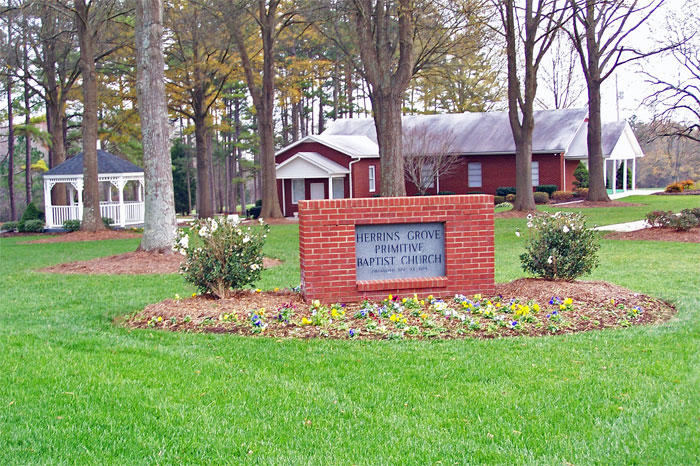
Image result for herrin's grove primitive baptist church


In Book 3 Page 91  Hezekiah Herrin sells to Talitha Lambert (his daughter), for $100, 164 acres on the waters of Stony Run and Jordan's Branch, " on the south side of the old road near Lambert's line". 

WB Herrin and Green D. Whitley were witnesses.

In Book 3 Page 362, in 1851, Robert Motley and others to Nathan Lambert, a very interesting deed is found. This would be the younger Nathan, son of John Jr., as the older Nathan, son of Rev. John, had migrated to Marion County, Illinois by then. The 1839 deed would have been Nathan the 1st, son of Rev. John, as Nathan the younger would have been too young at the time. Robert, Ransom and Thomas Motley (Jr.) by their agent "N. Barringer", of Cabarrus County, sold 5 tracts of 100 acres that had been sold by Anthony Williams to Thomas Motley, Sr. on the north side of the Public Road. "30 acres one part sold to John Lambert Sr. for metes and bounds of the original tract reference made to the deed from Hellums to Motley and other tract on waters of Running Creek, John Lamberts corner, then with his own and Thomas Motley's sons line and Hellums old line of 12 acres". 

It was signed by Ransom, Robert and Thomas Motley via their attorney. G. A. Whitley was a witness. As a note, the name "Hellum" was the original form of Helms, a large family centered in the Union County, Monroe area. There are plenty of Helms in Stanly County. I descend from a Tillman Helms who married Mary Elizabeth Preslar or Presley. They were some of my 5th Great Grandparents. Her Grandfather, Andreas (or Andrew) Preslar immigrated from Rheinland-Pfalz, Germany, via New York and Massachusetts and settled on the Rocky River in what was then Anson County. The name stayed Preslar in some lines and was "countrified" to Presley in others, just as Hellums became Helms and in some lines who migrated west, remained Hellums. You may can guess that Andreas Preslar left one very famous descendant among members of the family who migrated from right here on the banks of the Rocky River, to Tennesee. Yes, it was with great pleasure, that before her death, I was able to inform my mother, thanks to Ancestry.com, that she was indeed, a 10th cousin to her idol, the infamous Elvis Presley, the king of Rock and Roll.


Image result for elvis presley heritage
Elvis Presley as a child.


These cycle of deeds continues when on July 27, 1851, William Lambert sells to John  Lambert, for $50, 154 acres on Big Running Creek, near the forks with Little Running Creek. It was signed by William and witnessed by William Stancell and Nathan Lambert. Was this the same 154 acres sold by George Washington Lambert to Nathan Lambert I in 1844?

This was found in Book 3, Page 372. The very next page, 373 contained the following deed: March 1, 1852, Nathan Lambert to John Lambert for $13, a 19 and a half acres tract on Running Creek bordering the Salisbury Road.  It was witnessed by William Lambert and J. H. Herrin.


Also in 1852 was a deed  concerning the Motley heirs and the Lambert family again.

September 7th, 1852, Thomas Motley to William Lambert  Book 16 Page 23

Ransom, Thomas and Robert Motley by their Agent, Attorney Barringer, of Cabarrus County, sold to "Will J Lambert" of Stanly County for $160, a tract of land referred to as "the old Drury Place" and "Motley's old field". It contained 310 acres and included a tract of 78 acres "hereforto claimed by Ransom Motley" , but "not to include 12 acres claimed by John Lambert (Sr.) and for which he  has a deed from Thomas Motley."   The tract was located on Running Creek "adjoining John Lambert and the Ruben Almond tract. It was signed by "Agent Rufus Barringer" and witnessed by Henry Plott and Henry Hinson.

The very next page, Book 16 Page 24 was a sale of this same tract, also in 1852, from William Lambert to John Lambert, described to lie on Running Creek and the Fayetteville Road (which later became known as Route 24/27). This deed was ratified on December 3, 1885 certified by a codicil by Thomas Lambert, Justice of the Peace and the witness signatures of John L and William Lambert.

This, and many of the following Lambert family deeds caught my attention for that one issue, the ratification of Thomas Lambert, Justice of the Peace.

Now a little bit about Thomas Lambert. Thomas was what I call a Ribbon. He kind of ties the whole family together. Many family trees have Thomas as a son of Rev. John and Phida, and given, he was basically the same age as Jonathan, but he was a grandson, not a son.


Image result for district 3, Johnston county, nc


I will go into more detail on Thomas later, but briefly, he was born on July 31, 1820 in Johnston County, NC. He married to Nancy Partin in 1842 in Wake County, NC which borders Johnston County and shows up with her in the 1850 census, in Johnston County, their first two children, Julia and James, and a 28 year old William Lambert. Thomas was a merchant and William was a clerk. I've found newspapers articles on merchandise arriving in Wilmington and Fayetteville, up the Cape Fear, for the store they obviously ran together.

Image result for district 3, Johnston county, nc


The Lamberts lived in the Pleasant Grove township, which was in the pointy western corner of Johnston County and bordered Wake and Harnett, explaining why some of their marriages took place in Wake County. By 1860, Thomas was living in Wilkes County, beside a William Anderson, who may have had something to do with him naming a son Anderson. In the meantime, his younger brother, William Henry had married Millie Ann Watkins and was a Teacher in Johnston County and started his own family. The Lambert sons were well educated. Willliam Henry was also a Justice of the Peace in Johnston County.

Their father, William Lambert, was the first son and second child of Rev. John Lambert. He first shows up on a tax list in Johnston County with John, marries Louisa Young, daugher of a Thomas Young, in Wake County in 1819, shows up in Wake County in the 1830 census, in Cumberland County in 1840 and 1850, and then by 1860, he's back in Johnston County with his second family, after marrying Charlotte in Cumberland. In 1870 and 1880, he's alone and living in the household of his son William Henry. He had 4 sons by Nancy and a son and daughter by Charlotte. His youngest son was called Needham. There seems to me to be a close connection to the Needham Whitley family which started in Johnston County and moved to Stanly County also.

Before 1870, Thomas Lambert joined his Aunts, Uncles and Cousins in Stanly County. And he blew in with a vengence.  He appears to have evaded the War, no record of his serving. As a Justice of the Peace, it appears he gathered up all of the Lambert family land deeds, had them ratified in 1881 with the testimony of any living witnesses or relative witnesses of signatures. He was looking out for his family. He lived close to them, on land occupied by Lamberts for decades and was buried with many of them at Bear Creek when he died just a few years later at the age of 67.


Portion of map showing Liberty Hill, Pleasant Grove, 'Five Points, Red Cross and the town of Big Lick.

Daniel Freeman was a merchant in the County Seat of Lawrenceville, before the division of Montgomery County. After, he moved his store to the fledgling town of Albemarle in the newly minted County of Stanly, that had previously been known as "Smith's Store".  Located at the junction of Little Long Creek and Town Creek with Big Long Creek upon the rolling hills of the Hearne Plantation. 50 acres had been cut off of the plantation for the town, and citizens all over the county came to the little spot on the hill to do trading  and take care of court business. Several got in debt with Mr. Freeman, whom I believe to have been a nephew of my ancestor, Charlotte Freeman Winfield. The Lamberts were no exception.

November 9, 1856 Book 6 Page 528 John Lambert took out an indenture on his property for $150 for debt to Daniel Freeman.

November 20th 1856 Book 6 Page 531, his son William Lambert did the same for $175 a tract that bordered Nathan Lambert's line, Tucker's corner, Jonathan Lambert's corner, William Lambert's line and Tucker's line.

Book 14 Page 526 Jonathan Lambert sold to Nathan Lambert for $50  50 acres along the Concord Road where Running Creek crosses the road at the mouth of Spring Branch along William Lambert's line "in the presence of John Lambert" in Superior Court.

Thomas Lambert, Justice of the Peace, ratified this deed on 14 December 1885 with William Lambert verifying the signature of John Lambert.


In 1869, William Harrison Huneycutt and wife Tabitha sold to Thomas Lambert 78 acres on Little Bear Creek for $250 adjoining Isaac Bailey and Susan Perry and a second tract at the head of Muscle Springs near "Dunn's old line".

Then just a little later in Book 7 Page 131 Thomas bought another tract of land on Little Bear Creek from Levi H. Mason and wife Mary A. Mason bordering Reading (Reddin)  Almond.

By the 1870's, the next generation was getting involved. In 1873, John L Lambert bought land on Stony Run Creek from William H. Carter adjoining Jonathan Lambert, witnessed by C. W (Caleb Wiley) Lambert and N R Lambert

Book 9 Page 599 Thomas Lambert recieved a grant in 1875 for 12 1/2 cents an acre to the Treasurer for a 5 1/2 acre tract "where Howell Burleyson's line crosses said Lamberts".

In 1876 William "Buck" Lambert sold 82 1/2 acres to Anderson and Thomas Lambert Jr., sons of his cousin Thomas, that bordered Ransom Almond and John Almond.

Another notable deed was that between Ervin and Ellen Almond to William "Buck" Lambert. Ervin Lambert was the son of Pleasant Almond by his mistress, Barbara, born while he was still married to Rev. John Lambert's oldest daughter, Rebecca. Ervin married Buck Lambert's sister, Piety and had several children before she passed away. Then he married Ellen, who had lived in several different counties before she married. Her family migrated to Lafayette County, Mississippi, as did Ervin and Piety's two older children in adulthood. This deed shows that Ervin also moved to Mississippi, but returned to Stanly County and is buried in the Lambert cemetery. Ellen might have divorced him, as she remained in Missisippi and remarried. The deed lists them as "Ervin and Ellen Almond of Abbeville, Lafayette County,MS to William Lambert of Stanly County, NC.


Map showing location of Bear Creek Primitive Baptist Church

On April 1862, Andrew Huneycutt, administer of Jonathan Lambert, sold to William J. Lambert, son of Jonathan, his father's land on the Concord Road, Witnessed by Eli M. Herrin, William Lambert (probably Buck) and ratified by Thomas Lambert, JP in December of 1885. Book 16 Page 140

Just two pages later, in Book 16 Page 142 there was another deed that sort of proves a point of mine. It's between John Lambert (Jr.) and his son John Quincy Lambert, for land on Big Running Creek. It was witnessed by Caleb Wiley Lambert and his father, William "Buck" Lambert. It was ratified by Thomas Lambert, JP by oath of  CW  Lambert. Two points here: One, John Quincy Lambert was John Quincy alone. John Jr was never seen as John Quincy. I see many trees with him having this middle name or either that of William. I've never seen Reverend John with a middle name, nor John Jr. The other point was that of Thomas ratifying all of the family deeds. 

The Lambert deeds get thick and varied among the Grandsons, Great Grandsons and Great Great Grandchildren of Rev. John Lambert of Liberty Hill. Despite being poor as a church mouse and getting behind on his taxes, the old Primitive Baptist Minister left a legacy, and more than a few secrets.