Showing posts with label Cumberland county north carolina. Show all posts

Thursday, January 19, 2023

The Faulkners of Featherbed Branch


When digging through ancient, weathered deeds, one will come across many names, some who still color the hills on mailboxes and businesses, others who only graced the landscape with their presence for a brief era. Sometimes, when there is a lack of Wills, probate records, marriage bonds or Family Bibles, a story can be told in land records. Who was connected in some way or manner to who? Who lived on connecting properties? How was land divided? Who ended up with the property and how? Who sold the property and why?

The Anson County, North Carolina Faulkner family was a tangled web of unidentifiable relationships. They landed in the Jones Creek and Wilkey's Mill Creek area, just off the Pee Dee River, and not far from the South Carolina border, early on in the Revolutionary War era, and nearly all of them were gone by 1820. Only the son and daughter of Asa Elijah Faulkner and wife, Elizabeth Huntley remained, and that of my ancestor, John Falkner, born around 1807. He is the mystery.

 The line of one Francis Falkner has been reasonably well traced. Both Sr. and Jr. ended up spending the final years of their life in Anson County. Then, most of children of Francis Jr. seem to have migrated to Kentucky via Tennessee. But there were others, many others. One of them had to be the parents of John Faulkner. DNA confirms it. Two descendants of sons of John Faulkner have taken YDNA tests that point to them being descendants of Francis Falkner Sr., and out of the Queen Ann's County, Maryland group of Falkners. Keep in mind the surname can be seen as Faulkner, Falkner, Forkner, Falconer, Fortner, even for the same individual. Some Faulkners moved to Tennesse or South Carolina and became Fortners to this day.

Nathan Falkner is one of those phantom Falkners. He obviously had plenty of children, but in family trees, only one, Abraham, is tied to him. To me, there obviously appears to have been more. People have tied individuals I would think were certainly his sons, to a couple from elsewhere, who never even graced the area.  I can find no semblance of record, or even idea, on why one would think or link the two together. On the other hand,.....


Nathan Faulkner first appears in the 1771 tax record of Butte County, North Carolina, which no longer exists, but became Franklin and Warren Counties. He was a young man then, so thought to have been born between 1745 and 1750. Nathan is supposedly one of the younger sons of Francis Falkner, Sr.

He arrived in Anson County as soon as 1777, as is found in the following transaction.

On April 2, 1786 Richard Odem sold a tract of land to John Johnson, both of Anson County, a tract of land on the upper fork of Jones Creek that had been granted on January 2, 1772 by the King to Thomas Mitchell, who had sold it on March 18, 1774 to John Mitchell, who sold it on November 1, 1777 to Nathan Falkner, who sold it on April 10, 1778 to Henry Wilson, who sold it on Feb. 26, 1779 to Thomas Jones, who sold it on Sept 17, 1779 to Thomas Mitchell. Signed by Richard Odem and witnesses by John and Jonah Jackson. Book 2 Page 459.


They really played hot potato with that tract of land. Makes one wonder what was wrong with it. The same surnames pop up around the lands of the Faukners; Mays, Chiles or Childs, Wisdom, Buchanon or Bohannon, and Jarmin or German. The Standfields or Stanfills, were a family known to have migrated from the Cumberland River to Anson on the Pee Dee River, with the Faulkner family. There may have been an intermarriage or two between the families at some point. I do not know. I've included some deeds with their names as well. 

Book 7 P 29,  Oct 3, 1778 Gideon Brown, a farmer from Anson County, sold to James Brooks, also of Anson, 108 acres on the southwesst side of the Pee Dee River that bordered Robert Edwards lower corner of land that he had sold to James Brooks on the North side of Wilkey Mill Creek of Jones Creek and Drury Sims, part of a grant dated March 4, 1775 by the King to William May, deceased and sold June 27, 1778, by his heir, William May, to Gideon Brown. Witnesses were Nathan 'Falker' and Nathan Melton, oath Oct 1778.

Book 7 P 31 June 27, 1778 William May, planter to Gideon Brown, both of Anson, 640 acres on the south side of the PeeDee River and a fork of Jones Creek that bordered Robert Edwards lower corner of land he sold to  James Brooks on the North side of Wilkey's Creek of Jones Creek and Drury Sims, being where Gideon Brown lives; granted by the King to William May, signed William May Sr and witnesses by John Hurley and Nathan Melton in October of 1778. 

So William May, son of William May promptly sold this tract and then the very next page -

Book 7, P 32  Oct. 5, 1778 William May, Planter and wife Lucy of Anson to Sarah Flandemagem, spinstress, 200 acres bordering a small drain that's the first line of land of which it is a part of a 640 acres granted July 25 by the King to William May. Signed by William May with no witnesses.


Book 7, Page 166 On Sept. 30, 1779 Mr. Nathan Falkner appeared before Stephen Miller, Justice of the Peace and swore ' about 4 years since he bought 34 acres from William Eddins and paid Eddins for the land', (this would put it at about 1775) that he sold the land to Mr. Robert Hall, Falkner returned the deed to Eddins and Eddins gave Robert Hall a deed for 34 acres with Falkner as witness. The land was part of a grant to Mr. Lewis Lowery and joins Nathan Melton, John Stanfelt & Thomas Myers, signed by Nathan Falkner and Stephen Miller. 

There is the name of one of the Standfields that had migrated with the Faulkner clan and then again, Nathan Melton, another neighbor who had co-witnessed the May deed. Lewis Lowery is another name seen often in these transactions. 

Then.. "Robert Hall before    ----- swears he bought a tract of land from Nathan Falkner and made full satisfaction to Falkner, he recieved a deed from William Eddins and receipt for the money, Edens repealed Hall's deed, in the deed, John Street gave him for the tract adjoining John Stanfield, Nathan Melton and Thomas Myers on the north prong of Jones Creek of (the) Pee dee River  called Wilkes Mill Creek both Streets deeds to Edens and Edens deed to Hall were consumed by fire in his house with all his other writings. Witnessed by Michael Auld, clerk of Anson Court Oct. 1779

Book 4 Page 138. On Jan 25, 1780 James Mathews of Orange County to Nathan Faulkner of Anson County, 200 acres on the south side of Wilkey's Mill Creek, a fork of Jones Creek, near William May's line and granted to Drury Sims who had sold it to Zachariah Moorman. Signed James Mathews and witnessed by William May and Jeremiah Lewis.

Book 4, P 142. On August 9, 1780 Henry Wilson of Anson sold to Richard Odom of the same 100 acres on the south side of  Jones Creek bordering Thomas Mitchell and his two fields, granted to Thomas Mitchell by the King and sold by his son John to Nathan Falkner, who had sold it to Henry Wilson in 1778. Signed by Henry Wilson and witnessed by William Gulledge, Elisha Breeler and Sukey Granade 1783

Book 4, P 43 Dec. 20, 1780 Joshua Hodges, a farmer from Orange County, NC to Patrick Boggan, a farmer from Anson County, sold 100 acres on the SW side of the Pee Dee River. Other names mentioned were McNatt, Hurley, William May, Francis Thompkins, Joshua Hodges and wife "Liv". Witnessed by William Vaughn and Nathan Falkner in January 1782.

Anyone familiar with Anson County history is familiar with the name Patrick Boggan, a Revolutionary War hero. Next to this deed is another one involving William May and William Wood a 'wood joiner' and this one names 'William May, carpenter, son of William May, Sr.', which leads me to think they are referring to his trade to differetiate him from his father, not naming an individual 'William May Carpenter' which I've seen addressed as a full name.

Book 4 P 103 William McDaniel sold 300 acres on the east side of the Middle Prong of Jones Creek to Richard Odam  on Jan. 28, 1782, witnessed by Nathan Falkner "Jurat" and William Mays.

In October of 1782, Gov. Alexander Martin granted 100 acres on Featherbed Branch to Lawrence Franklyn.

Book 4, P 140. William McDaniel, Planter sold to Timothy Haney, a blacksmith, both of Anson, 150 acres on the Featherbed Branch of Jones Creek and bordering Robert Granade. Had been granted to William McDaniel in 1773. Witnesses were Nathan Falkner and Thomas Hutson. Oath on Oct 1782 by Nathan Falkner.

Featherbed Branch is a very important clue.


Book C p 456 On July 23, 1784, Timothy Haney, blacksmith, sells to Asa Faulkner, planter, 150 acres that began at a hickory in Malachi Watts line near a drain of Featherbed Branch of Jones Creek and joined the lands of Robert 'Jerman'. The lot had been granted to William McDaniel in 1773. Signed Timothy Haney. Witnesses were Nathan Falkner, Reubin Phillips & Sarah 'Boslick".

Now we see that Asa Faulkner has joined his brother Nathan in Anson County. In October of 1782, Asa had been in Granville County, NC, the first mention of him, and witnesses the wedding of his cousin, Moses Faulkner, who had married Sussanah Salter or Saulter. This was also one year after Nathan and his wife had witnessed the will of Benjamin Falkner. 

The land being transferred was the very same lot that William McDaniel had sold to Timothy Haney just two years earlier, that Nathan had been a witness to.

Book 2 p 305, on Jan. 5,1785, Nathan Falkner and John Lowery witnessed a deed between Abraham Strickland and Malachi Watts concerning a property on Little Brown Creek.

Book 2 p 302 , just a month later, on Feb. 15, 1785, both of these same men, Nathan and John Lowery, witnessed a deed between John Duncan and Malachi Watts on the same creek and bordering the property of Abraham Strickland. Malachi might have been a friend of Nathan or might have even married a Falkner.


Book 2, p 15 Robert Hall of Anson sold 100 acres to Benjamin Buchanan Sr. of Chatham County, NC that crossed the road to Robert Hall's place. Witnesses were Benjamin Buchanon, Jr. and Stephen Pace. 

On April 11, 1785 Charles 'Lizenbee' and wife Elizabeth, of  'Camblin' (Camden) District, SC sold 322 acres to Benjamin Buchanon Sr. of Chatham County, NC. This lot joined Tyson Meador Jr's and was on the southside of Jones Creek and had been granted by the King to Lewis Lowery. Witnesses were Stephen Pace, who now is mentioned several times, and Ben Jr..

Enter the Buchanons. A Benjamin Buchanon appears in many of the later dealings with the Faulkners, and even with my John Faulkner. 1785 must have been the year they moved from Chatham County. It must also be around the year that Charles Lisenby relocated from Anson County to Chesterfield County, SC. I'm also researching my genetic connection to a set of Lisenby's, who, as fate would have it, descend from this Charles Lisenby.

Book 2 P55 December 2, 1786 Stephen Pace, Esquire, of Anson to 'Stalin' May of the same, 200 acres on the South Side of Wilkey's Mill Creek and fork of Jones Creek. It bordered William May and was part of an older grant sold by Drury Sims and Zachariah Moorman who had sold it to James Mathis, who had sold it to Nathan Faulkner , who had sold it on Feb. 10, 1784 to Stephen Pace. Witnesses were William May and Jonah Jackson.

Book 2, Page 20 Jan. 19, 1788, James Farr of Anson sells to Asa Faukner, 50 acres on Jones Creek, on George 'Londsell' Rudds lines, borders Thomas Jones, Bexley John Lamden and Morrises' Branch, including a mill seat. Witnesses were Peter Bond and William Ricketts.

Asa has purchased his mill.

1790, the first census of the United States of America is taken. Five households of the Faulkner family is found in Anson County, NC.

Name:Nathan Falkner
Home in 1790 (City, County, State):Anson, North Carolina
Free White Persons - Males - 16 and over:2
Free White Persons - Males - Under 16:5
Free White Persons - Females:4
Number of Household Members:11


First there is Nathan. He has 2 males over 16 in the home, and 5 under 16, which appears to mean that he was the father of several sons, and possibly 3 daughters, as there are 4 females in the home and one would be Sarah.

Name:Archd Falkner
Home in 1790 (City, County, State):Anson, North Carolina
Free White Persons - Males - 16 and over:1
Free White Persons - Females:2
Number of Household Members:3


Nathan's son, Archibald, is already head of his own household. He must have been the oldest son. Archibald is the one son attributed to Nathan. He has a young family, probably his bride and their first little baby girl. He's living near John Culpepper, Sterling May and the Granades.

Name:Asa Falkner
Home in 1790 (City, County, State):Anson, North Carolina
Free White Persons - Males - 16 and over:1
Free White Persons - Males - Under 16:3
Free White Persons - Females:3
Number of Household Members:7


Then there's Asa, he has a household of 7, himself, three males under 16 and 3 females. It is unknown who they would be, as his three known children were not born yet. Perhaps siblings.

Name:Francis Falkner
Home in 1790 (City, County, State):Anson, North Carolina
Free White Persons - Males - 16 and over:3
Free White Persons - Males - Under 16:1
Free White Persons - Females:4
Number of Household Members:8

Then there is Francis. This is Francis, the brother, as Francis the father supposedly died in 1783. He has a household of 8, four females, three males under 16, and himself. Actually, Francis was enumerated twice, or there were two Francis's. In this record he was sandwiched in between Gilchrist Johnson and Edward Lloyd.

Name:Francis Falkner[]
Home in 1790 (City, County, State):Anson, North Carolina
Free White Persons - Males - 16 and over:3
Free White Persons - Males - Under 16:1
Free White Persons - Females:4
Number of Household Members:8

In the next one, he's sandwiched between Ruth Conner and  Isom Melton, Benjamin Rudd is nearby. The family dynamics are the same. Exactly.

The other household is that of Elizabeth, widow of Benjamin Faulkner, with her two sons, John and Henry, and an extra female in her home.

Francis had two Land Grants in Cumberland County. Elisha Faulkner had one in Anson on the head 'drains' of Morris's Branch, dated 1801. Elisha has not been mentioned yet. Nathan had two.
Nathan FaulknerAnson1790-11-16178450Beg. in Jermans line in a pine in Cunninghams line on the waters of Gold Fork4781

One on the waters of Gold Fork and Jermans line dated 1784.

Nathan FaulknerAnson1790-11-161787100Beg. at a stake on Wm. Mays line4875


Another on William May's line dated 1787.

Jno. FaulknerAnson1799-07-261797150Beginning at a hickory on the Feather bed Branch5380
There's also a John, who hasn't shown up yet. And he lived on Featherbed Branch.

None for Francis in Anson County. 

Yet on May 10, 1789, just before 1790, David Jameson, 'late' Sheriff of Anson County sold to John May (those dang Mays!) 62 acres on Wilkey's Mill Creek of Jones Creek that bordered Lowery's, part of a tract involving Thomas Myers and Nathan Melton that was sold during a "fieri facais", which is a levy on goods due to a judgement against a debtor. This action was due to a suit dated April of 1789 in the Anson County Pleas and Quarters Sessions between John May and Francis Falkner. Witnesses were James jameson and Isaac Lanier.

Book F Page 152. This one is a really confusing deed to me. In my previous post, 'The Letter', I examined the family of Asa Falkner, who married Elizabeth Huntley, and died in 1806. They had three named children: Job, Asa William Luther, Sr. (who married Susan Myers) and Sarah Susannah, (who married Willam Webb). In the letter from Asa W. L to his 'Uncle' Job, in Georgia, he called his father, Elijah. In this deed, Asa and Elijah are obviously two different people. 

Januay 29, 1799, Benjamin Duckworth to Alexander McRea, for $100 NC money sold 150 acres on Lowrey's Branch that bordered the property of Thomas Dickson, a Dry fork, Rainey, the Great Branch and 'Odoms old line' that had been granted to Charles Lisenby. Signed by Benjamin Duckworth and witnessed by Asa Faulkner and Elijah Faulkner. Witness oath July, 1799 by Elijah Falkner. Book F Page 152.

Elijah did not appear in the 1790 census. Was he living with Asa or Francis? How does he fit in?


Book F P. 159  Marianne Jarman, spinster (or single woman), sold 200 acres to John Cason. The property began at a stake in Boyd's third line and was part of a tract of land that was patented to Robert Jarman on the south branch of Jones Creek. Marianne signed with an "M" mark and the witnesses were William Wisdom, Asa Fallkner and Nathan Falkner. Witness oath in July 1779 by Asa Falkner.

Enter the Wisdom family, and Marianne must have been a daughter of Robert Jarman. Quickly, who were the Jarman/ Jerman/ German family? 

According to online information on the family, they had came from England and originally settled in Calvert County, Maryland on the Patuxent River. Quite interestingly enough, one of their neighbors there was a William Lowery. A John and Robert Jarman, brothers, then sold their land and moved across the Chesapeake Bay to Queen Anne's County, Maryland, on Tuckahoe Creek. Coincidentally, Queens Ann's County, Maryland is where the Faulkner family originated. Francis and possbily Nathan, too, had been born there. Could they have migrated with the Jarman's? From there, the Jarmans migrated to Craven and Onslow County, NC and like the Faulkners, eventually to Anson County, where they settled in the same general area as the Faulkners.

Map of Queen Annes County, Maryland


Book C2 dated April 30, 1793, 'Samson' Stanfield  and Easter Stanfield of Anson County to John May, Sr., 58 acres on the North Bank of Wilkeys Mill Creek of Jones Creek in Lewis Lowrey's upper line and joins Nathan Melton. Signed by Sampson Stanfield and Easter Stanfield. Witnesses were Joseph Falkner and 'Ede' Falkner. Witness Oath July 1793 by Josesph Falkner.

Ok, here are two new, before unmentioned Falkners, Joseph and Ede, in association with Sampson Stanfield, whom we know had migrated several times with the Faulkners already. Sampson Stanfield, was the son of John Franklin Stanfield and Mary Sherod. The Stanfields had migrated from Virginia to Cumberland County, North Carolina, where they had made association with the Francis Faulkner Sr. family and had migrated with the Faulkners to Anson County, NC. John Stanfield died in Anson County, as did Francis Falkner. Sampson Stanfields wife Easter, was in all liklihood, a Faulkner. She died before 1799, when he remarried to a Nancy Thomas. He had 5 children with Easter and 9 with Nancy. Together with children of Francis Falkner Jr., including son Francis Ballenger Faulkner, Sampson and Nancy migrated through East Tennesee to Knox County, Kentucky. 

Joseph was a son of Francis Falkner, Jr. and 'Ede' may have been his sister Edith, who married a Price. Joseph and Sampson Standfield were among the group that would move soon, after this, to Blount County, Tennesse, and then, by 1810, to Knox County, Kentucky and Whitley County, which was carved out of Knox in 1818.

Another deed involving the Stanfields was the following: Book C2 Page 301 was a transaction dated Jan. 22, 1794 wherein William Johnson of Anson County sold 300 acres to Isaac Shepherd and wife, Margaret, John Baily and wife, Elizabeth and James Stanfield and wife, Mary. The land was on the Pee Dee River near Island Creek, sold to William Johnson by Mary Cox "for and during" her lifetime. The land had descended to her after the death of her husband, William Cox and her son, William Cox (Jr.) . It was signed by William Johnson, Benjamin Carter and Mary Carter, with the witnesses being Rufus Johnson and Arthur Davis. 


Just a week or so later, on Feb 7, 1794, Book C2, P 290,  John Bailey, Isaac Shepherd and James Stanfield of Anson, sold to Lot Strickland of Richmond County, NC, the same above mentioned tract at the mouth of Island Creek. It was said to be the original tract of a division line between Jacob Paul and William Cox and a dividing line between John Hornbeck and William Hoggat, part of a 500 acres tract granted in 1747 to John Newberry, who sold it to John Hornbeck, who sold it to a Chambers, who sold it to William Cox, Sr., who had bequeathed it to his 3 daughters, Elizabeth, Margaret and Mary, who had 'since intermarried' with John Bailey, Isaac Shepherd and James Stanfield. It was signed by the Cox sisters and their husbands and witnessed by William Jurnigan, Sampson 'Stanfill', Nevel Bennett, and William Shepherd. 

I will exit here and continue with more from the late 1790's and early 1800's on the Faulkners of Featherbed Branch, their neighbors and associates. 


Sunday, December 9, 2018

Early Land Records of the Stanly County Lamberts

What tales do the land records tell?

To some people, the old 19th century script and tree-killing legalese of old land records are hard to read and not relevant to their families' story. I find this quite the contrary. While learning to read ancient handwriting can prove to be a struggle, learnig that "f's" were often "s's" and chains, walnut trees, branches, springs, corners and lines can sometimes be the only link from one family member to another. Did they live side by side and have the same neighbors? Did the property pass from one generation to another? Did they witness each other's deeds and sign each others bonds? I've found a wealth of knowledge in land transactions.


I've not found one single deed in the Montgomery County records, which covered the area that is now Stanly, with the name "Lambert" on it, but sometime, somehow, before Stanly County was born in 1841, Rev. John Lambert had acquired 66 acres in what became Stanly County, somehow and from someone. It could be that the deeds were lost in one of the Montgomery County Courthouse fires, or were just never ratified.

The Lamberts settled on both sides of the Furr Township and Almond Township border. By the time this map came out about 60 years later, they were so numerous the community was called "Lambert". Notice all of the Lamberts on the above map. Many of the Almonds and McLure's were also grandchildren of Rev. John Lambert as one of his daughters married an Almond and a granddaughter married a McLure.


This old map pinpoints the location of J. T. Coley's Store. A road still bears the name, "Coley's Store Road". Two Lambert family cemeteries, one holding the remains of Rev. John Lambert and his granddaughter, Lavina Almond McLure, probably his wife Phida, and around 30 other family members are centered around the intersection of Coley's Store Road and Ridgecrest Road. This was more than likely the location of the old homestead of Rev. John.


The oldest Lambert deed in the Stanly County records, dated 1839, two years before Stanly was Stanly,  proves there were Lambert land transactions in "Montgomery", but what happened to them, I don't know. It was between Frederick Lambert and his brother Nathan. November 13th, 1839 Frederick Lambert of Montgomery County sold to Nathan Lambert of the same, for $110, property on Big Running Creek that intersected John Lambert's corner and ran with Martin Widenhouse's line. It was proved by John Lambert, Jr. in 1854

Frederick was on the move. He had showed up in Montgomery in the 1830 census, and had showed up in court records of Cabarrus in 1825 when they sent the sheriff to Montgomery County to fetch him, but the sheriff failed and was fined. He would show up in the records of Tishomingo County, Mississippi by 1842, when he was elected Treasurer of the County and applied for a license, along with a William Rushing, to open a tavern. It seems in those few years, 1839 to 1842, he had made that long journey, by horse and buggy and had well established himself in the community. Worth noting is that in 1844, his father, Rev. John Lambert, would build the Liberty Hill Church in conjunction with another William Rushing.


Image result for damage to Mississippi during civil war
Mississippi war destruction

Frederick filed several denied claims with the U. S. Southern Claims Commission. This was an agency set up to reimburse Union sympathizers who had lived in the Southern States during the Civil War for damages and losses they had suffered during the war. Frederick made several interesting statements in his depostitions. One that caught my eye involved the time he was still in North Carolina.

"In nullification times I lived on the border of South Carolina. It was publically declared that the man who dared to vote for Jackson should be flogged. Before 100 men I showed my ticket and cast my vote for Jackson. A few others followed me. If you want to know, I'm not afraid of 1000 men, I'm afraid of doing wrong".

The nullificaton period he spoke of occured during 1832-1833, during the Jackson Administration. South Carolina had declared that the Federal Tariffs of 1828 and 1832 were unconstitutional and therefore null and void in their state. This period began the doctrine of the assertion of states rights that would lead eventually to other acts and decrees that eventually led to war.

Frederick was in Stanly County, North Carolina at this time and the election he spoke of was probably the one of 1828. It's worth noting that John Lambert, nor any of his sons, ever owned slaves. A few of his grandsons did serve in the Confederate Army, whether by choice or by force, is a different matter that I will explore later. Frederick was a devout Republican and I am led to believe his father and brothers were as well. There were John Lamberts in Randolph and Chatham who owned large properties and many slaves. They were not our John. He was a Circuit riding minister who remained poor as a church mouse. He stored up his riches in heaven. Frederick, however, became a businessman and farmer and did well for himself. He suffered the loss of $5000 cash and many horses and other livestock during the War, for use of the Union Army.


The above section of map shows the location of Pole Bridge Creek and Running Creek

In 1844, George Washington Lambert was the one on the move. In 1841, he had been taxed for 105 acres. On March 1st, 1844, he sold to his brother Nathan, both of Stanly County, for $50.00, 154 acres

"on the head waters of Big Running Creek". 

T. A. White and Susan White were witnesses. On the same day, March 1st, 1844, for $25, he sold to John Lambert (probably his brother John, not his father John), 87 acres on the headwaters of Big Running Creek.

George W. Lambert relocated to Iredell County, NC. He married Jane "Jennie" Page, a sister to John Calvin Page who married his sister Piety. He probably relocated with Burwell Pliler (Plyler), who was his neighbor in 1860. George and Jane had a large family, but did not profit much. They farmed, but did not own any land. He may have faired better to have stayed in Stanly County. There were already a few Lamberts there before he arrived and several descendants have tried to tack him to them, even suggesting he was one of them, but had changed his name. Fortunately, two of their sons who lived long enough to have death certificates, have them as being born in Stanly County on them, and dna has verified this is our George. Some current descendants go by Lamberth instead of Lambert.


Martin Widenhouse was a wealthy landowner in southeast Cabarrus County. His father, of the same name, was born in Germany. The following land transaction most likely involved Martin Jr. as I believe Martin Sr. died in the 1840's. The Widenhouse family settled thickly around the Midland and Georgetown areas of  Cabarrus.

1850 Martin Widenhouse of Cabarrus County to John Lambert of Stanly County for $90, 120 acres on Pole Bridge Creek. It adjoined John Lambert "and others". There was one exclusion, Martin kept claim on "one half of the gold and silver mines". Nathan Lambert was a witness. The property was fairly close to Reed's Gold mine.

Also in 1850, Jonathan Lambert sold to William Lambert for $5.00 104 acres that bordered a line William Lambert owned already, on the "waters of Stony Run".


Image result for stony run creek, stanly county
Stony Run Creek


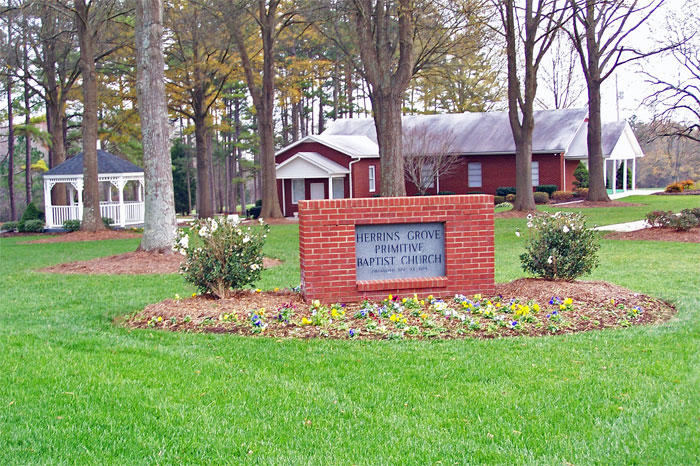
This William Lambert was the son of John Jr., and was also known as "Buck" Lambert. He was my direct ancestor. He was born in 1824 and married Talitha Herrin, a daughter of Hezekiah Herrin, who was mentioned in the dockets of Bear Creek Church and who was the patiarch of the Herrin family and community for which the Herrin School, shown on these map snippets, was named for. His uncle William, the oldest son of Rev. John was living in Cumberland County at this time.

Jonathan was but a few years older than Buck. There's been speculation on whether he was a son of Rev. John Lambert or John Jr. These old 19th century farm families began having children from marriage to when the mothers were in their 40's. Many children did not make it to adulthood due to plagues and diseases, ailments that are treatable now, fires and accidents, even wild animals. There were bear and buffalo in this area when the first settlers arrived, hence the names "Bear Creek" and "Buffalo Creek".  I've read numerous sad old stories about toddlers falling off horses, or little girls catching their skirts on fire by playing too close to the hearth, or even babies placed on pallets while the mothers tended garden nearby, being taken by hawks or other predators such as wolves or wildcats, not to mention the bouts of thyphoid, TB or influenza that would wipe out half the family.


Phida would have been 21 upon the birth of Rebecca in 1795 and well into her 40's by the birth of Jonathan, but I'm siding with the theory of Jonathan being Rev. John and Piety's due to 2 factors. One, he was living with them in 1850, and two, John Jr. outlived Jonathan and left a will. In the will, he mentions his orphaned grandchildren, but not the children of Jonathan.

Image result for herrin's grove primitive baptist church


In Book 3 Page 91  Hezekiah Herrin sells to Talitha Lambert (his daughter), for $100, 164 acres on the waters of Stony Run and Jordan's Branch, " on the south side of the old road near Lambert's line". 

WB Herrin and Green D. Whitley were witnesses.

In Book 3 Page 362, in 1851, Robert Motley and others to Nathan Lambert, a very interesting deed is found. This would be the younger Nathan, son of John Jr., as the older Nathan, son of Rev. John, had migrated to Marion County, Illinois by then. The 1839 deed would have been Nathan the 1st, son of Rev. John, as Nathan the younger would have been too young at the time. Robert, Ransom and Thomas Motley (Jr.) by their agent "N. Barringer", of Cabarrus County, sold 5 tracts of 100 acres that had been sold by Anthony Williams to Thomas Motley, Sr. on the north side of the Public Road. "30 acres one part sold to John Lambert Sr. for metes and bounds of the original tract reference made to the deed from Hellums to Motley and other tract on waters of Running Creek, John Lamberts corner, then with his own and Thomas Motley's sons line and Hellums old line of 12 acres". 

It was signed by Ransom, Robert and Thomas Motley via their attorney. G. A. Whitley was a witness. As a note, the name "Hellum" was the original form of Helms, a large family centered in the Union County, Monroe area. There are plenty of Helms in Stanly County. I descend from a Tillman Helms who married Mary Elizabeth Preslar or Presley. They were some of my 5th Great Grandparents. Her Grandfather, Andreas (or Andrew) Preslar immigrated from Rheinland-Pfalz, Germany, via New York and Massachusetts and settled on the Rocky River in what was then Anson County. The name stayed Preslar in some lines and was "countrified" to Presley in others, just as Hellums became Helms and in some lines who migrated west, remained Hellums. You may can guess that Andreas Preslar left one very famous descendant among members of the family who migrated from right here on the banks of the Rocky River, to Tennesee. Yes, it was with great pleasure, that before her death, I was able to inform my mother, thanks to Ancestry.com, that she was indeed, a 10th cousin to her idol, the infamous Elvis Presley, the king of Rock and Roll.


Image result for elvis presley heritage
Elvis Presley as a child.


These cycle of deeds continues when on July 27, 1851, William Lambert sells to John  Lambert, for $50, 154 acres on Big Running Creek, near the forks with Little Running Creek. It was signed by William and witnessed by William Stancell and Nathan Lambert. Was this the same 154 acres sold by George Washington Lambert to Nathan Lambert I in 1844?

This was found in Book 3, Page 372. The very next page, 373 contained the following deed: March 1, 1852, Nathan Lambert to John Lambert for $13, a 19 and a half acres tract on Running Creek bordering the Salisbury Road.  It was witnessed by William Lambert and J. H. Herrin.


Also in 1852 was a deed  concerning the Motley heirs and the Lambert family again.

September 7th, 1852, Thomas Motley to William Lambert  Book 16 Page 23

Ransom, Thomas and Robert Motley by their Agent, Attorney Barringer, of Cabarrus County, sold to "Will J Lambert" of Stanly County for $160, a tract of land referred to as "the old Drury Place" and "Motley's old field". It contained 310 acres and included a tract of 78 acres "hereforto claimed by Ransom Motley" , but "not to include 12 acres claimed by John Lambert (Sr.) and for which he  has a deed from Thomas Motley."   The tract was located on Running Creek "adjoining John Lambert and the Ruben Almond tract. It was signed by "Agent Rufus Barringer" and witnessed by Henry Plott and Henry Hinson.

The very next page, Book 16 Page 24 was a sale of this same tract, also in 1852, from William Lambert to John Lambert, described to lie on Running Creek and the Fayetteville Road (which later became known as Route 24/27). This deed was ratified on December 3, 1885 certified by a codicil by Thomas Lambert, Justice of the Peace and the witness signatures of John L and William Lambert.

This, and many of the following Lambert family deeds caught my attention for that one issue, the ratification of Thomas Lambert, Justice of the Peace.

Now a little bit about Thomas Lambert. Thomas was what I call a Ribbon. He kind of ties the whole family together. Many family trees have Thomas as a son of Rev. John and Phida, and given, he was basically the same age as Jonathan, but he was a grandson, not a son.


Image result for district 3, Johnston county, nc


I will go into more detail on Thomas later, but briefly, he was born on July 31, 1820 in Johnston County, NC. He married to Nancy Partin in 1842 in Wake County, NC which borders Johnston County and shows up with her in the 1850 census, in Johnston County, their first two children, Julia and James, and a 28 year old William Lambert. Thomas was a merchant and William was a clerk. I've found newspapers articles on merchandise arriving in Wilmington and Fayetteville, up the Cape Fear, for the store they obviously ran together.

Image result for district 3, Johnston county, nc


The Lamberts lived in the Pleasant Grove township, which was in the pointy western corner of Johnston County and bordered Wake and Harnett, explaining why some of their marriages took place in Wake County. By 1860, Thomas was living in Wilkes County, beside a William Anderson, who may have had something to do with him naming a son Anderson. In the meantime, his younger brother, William Henry had married Millie Ann Watkins and was a Teacher in Johnston County and started his own family. The Lambert sons were well educated. Willliam Henry was also a Justice of the Peace in Johnston County.

Their father, William Lambert, was the first son and second child of Rev. John Lambert. He first shows up on a tax list in Johnston County with John, marries Louisa Young, daugher of a Thomas Young, in Wake County in 1819, shows up in Wake County in the 1830 census, in Cumberland County in 1840 and 1850, and then by 1860, he's back in Johnston County with his second family, after marrying Charlotte in Cumberland. In 1870 and 1880, he's alone and living in the household of his son William Henry. He had 4 sons by Nancy and a son and daughter by Charlotte. His youngest son was called Needham. There seems to me to be a close connection to the Needham Whitley family which started in Johnston County and moved to Stanly County also.

Before 1870, Thomas Lambert joined his Aunts, Uncles and Cousins in Stanly County. And he blew in with a vengence.  He appears to have evaded the War, no record of his serving. As a Justice of the Peace, it appears he gathered up all of the Lambert family land deeds, had them ratified in 1881 with the testimony of any living witnesses or relative witnesses of signatures. He was looking out for his family. He lived close to them, on land occupied by Lamberts for decades and was buried with many of them at Bear Creek when he died just a few years later at the age of 67.


Portion of map showing Liberty Hill, Pleasant Grove, 'Five Points, Red Cross and the town of Big Lick.

Daniel Freeman was a merchant in the County Seat of Lawrenceville, before the division of Montgomery County. After, he moved his store to the fledgling town of Albemarle in the newly minted County of Stanly, that had previously been known as "Smith's Store".  Located at the junction of Little Long Creek and Town Creek with Big Long Creek upon the rolling hills of the Hearne Plantation. 50 acres had been cut off of the plantation for the town, and citizens all over the county came to the little spot on the hill to do trading  and take care of court business. Several got in debt with Mr. Freeman, whom I believe to have been a nephew of my ancestor, Charlotte Freeman Winfield. The Lamberts were no exception.

November 9, 1856 Book 6 Page 528 John Lambert took out an indenture on his property for $150 for debt to Daniel Freeman.

November 20th 1856 Book 6 Page 531, his son William Lambert did the same for $175 a tract that bordered Nathan Lambert's line, Tucker's corner, Jonathan Lambert's corner, William Lambert's line and Tucker's line.

Book 14 Page 526 Jonathan Lambert sold to Nathan Lambert for $50  50 acres along the Concord Road where Running Creek crosses the road at the mouth of Spring Branch along William Lambert's line "in the presence of John Lambert" in Superior Court.

Thomas Lambert, Justice of the Peace, ratified this deed on 14 December 1885 with William Lambert verifying the signature of John Lambert.


In 1869, William Harrison Huneycutt and wife Tabitha sold to Thomas Lambert 78 acres on Little Bear Creek for $250 adjoining Isaac Bailey and Susan Perry and a second tract at the head of Muscle Springs near "Dunn's old line".

Then just a little later in Book 7 Page 131 Thomas bought another tract of land on Little Bear Creek from Levi H. Mason and wife Mary A. Mason bordering Reading (Reddin)  Almond.

By the 1870's, the next generation was getting involved. In 1873, John L Lambert bought land on Stony Run Creek from William H. Carter adjoining Jonathan Lambert, witnessed by C. W (Caleb Wiley) Lambert and N R Lambert

Book 9 Page 599 Thomas Lambert recieved a grant in 1875 for 12 1/2 cents an acre to the Treasurer for a 5 1/2 acre tract "where Howell Burleyson's line crosses said Lamberts".

In 1876 William "Buck" Lambert sold 82 1/2 acres to Anderson and Thomas Lambert Jr., sons of his cousin Thomas, that bordered Ransom Almond and John Almond.

Another notable deed was that between Ervin and Ellen Almond to William "Buck" Lambert. Ervin Lambert was the son of Pleasant Almond by his mistress, Barbara, born while he was still married to Rev. John Lambert's oldest daughter, Rebecca. Ervin married Buck Lambert's sister, Piety and had several children before she passed away. Then he married Ellen, who had lived in several different counties before she married. Her family migrated to Lafayette County, Mississippi, as did Ervin and Piety's two older children in adulthood. This deed shows that Ervin also moved to Mississippi, but returned to Stanly County and is buried in the Lambert cemetery. Ellen might have divorced him, as she remained in Missisippi and remarried. The deed lists them as "Ervin and Ellen Almond of Abbeville, Lafayette County,MS to William Lambert of Stanly County, NC.


Map showing location of Bear Creek Primitive Baptist Church

On April 1862, Andrew Huneycutt, administer of Jonathan Lambert, sold to William J. Lambert, son of Jonathan, his father's land on the Concord Road, Witnessed by Eli M. Herrin, William Lambert (probably Buck) and ratified by Thomas Lambert, JP in December of 1885. Book 16 Page 140

Just two pages later, in Book 16 Page 142 there was another deed that sort of proves a point of mine. It's between John Lambert (Jr.) and his son John Quincy Lambert, for land on Big Running Creek. It was witnessed by Caleb Wiley Lambert and his father, William "Buck" Lambert. It was ratified by Thomas Lambert, JP by oath of  CW  Lambert. Two points here: One, John Quincy Lambert was John Quincy alone. John Jr was never seen as John Quincy. I see many trees with him having this middle name or either that of William. I've never seen Reverend John with a middle name, nor John Jr. The other point was that of Thomas ratifying all of the family deeds. 

The Lambert deeds get thick and varied among the Grandsons, Great Grandsons and Great Great Grandchildren of Rev. John Lambert of Liberty Hill. Despite being poor as a church mouse and getting behind on his taxes, the old Primitive Baptist Minister left a legacy, and more than a few secrets.