My Wednesday trip to Lancaster, South Carolina was an entirely different journey than the one through Anson to Bennettsville.
Highway 200 from Locust, in Stanly County, leads directly to Lancaster through Union County and Monroe, NC, and then a straight shot into Lancaster County. The landscape is entirely different from start to finish, and the feeling in the air as well. The western edge of Stanly County, and Union County, specifically, has been infected by the virus called Charlotte-Metro. Commuters venture further away from the chaos of Charlotte town and her highways, so her webb spans wider, every thing looks newer. History has been paved over to make way for better roads, parking lots and cookie-cutter-cramped housing.
Monroe Victorian in repair mode.
Crossing the old Rocky from Stanly into Union, the previous days rains had filled her up and she was charging toward the ocean in a muddy rage. Unlike the woodsy, fertile, earthy scent in the air in Anson, the breezes of Union carry the scent of traffic and newly mown grasses. There is country and farms down 200, an old twisty road, suggesting it has been around awhile, the path from Concord to Monroe and on to Lancaster, but they look highly remodeled and mostly occupied. Very well-groomed and modern. Monroe, herself, has tried to save her history, but Highway 74 rages through her from Charlotte like the angry mass of bovine during the 'Running of the Bulls.'
I hate highways, and 200 runs with 74 for awhile. When she veered off, and I attempted to change lanes, a small truck, determined that I was not to be in his way, sped toward me at ramming speed and I had to jerk the wheel back into my old lane to avoid a collision. Just a reminder of why I hate Interstates and similar highways.
Colorful Monroe Historic Home
Back on the more reasonable 200, I get behind a lopsided burgandy Van, in need of a bath. At the first stoplight, we were going in different directions, so I was able to pull up behind this lady who had no clue why she couldn't get above 30 mph. Her rear front tire was sticking out at least 3 inches upon the road, nearly entirely flat. There were gas stations on either side of the intersection. She could have pulled into either one. The Van was filled to the gills with children, at least 6 or 7 and two boys fighting in the back, third seat of it. A young teenaged girl looked over at me as I beeped at them, and away from her handheld game or phone. She was wrapped in a blanket and tapped on her mother's seat as I was motioning toward the tire. The mother looked over at me as I slapped my hands together indicating 'flat'. She looked totally confused, made a left turn and kept slinking slowly down the highway, oblivious. Perhaps she did not speak sign language either.
I saw no history along this trail until passing over the Rocky River Road. Then there was an arrow pointing the way down the Tirzah Church road to Andrew Jackson's home place and a historic event sign concerning Davie's Attack. To read more about this event, click here: Davie's attack, Revolutionary War Battle, 1780.
Not far down the road from this sign is another advertising an interesting museum. I had to do a double-take seeing a sign professing 'Wyclef' and Mexico Museum and an Alphabet Museum. What was an Alphabet Museum and what would a Mexico Musuem be doing in Union County, NC and what does Wycliff have to do with it? But they do indeed have one.
The Alphabet Museum
Immediately after crossing the NC-SC border, what begins, but history. SC cut Charlotte and her viney fingers off at the border.
I went to Lancaster in search of a trace of my great, great, great grandfather, Frederick Fincher Starnes. He does not show up in the NC census until 1860, and his oldest two daughter, Alice and Leavy, were born in South Carolina. His wife Mary Louise Bynum was born in NC, but her mother Martha was born in SC. Finch is recorded as having been born in GA, SC and NC. So which is true? He was born in 1828, and would have been a young adult man in 1850 of about 21 or 22. His Civil War papers record him as being from Lancaster District, SC and from Union County, NC. The Starnes/Sternes hovered around the Waxhaw area, so it was sensible to think he may have made his way just across the border down Cane Creek or something, to Lancaster District to start out in life.
Pine forest on what was an old Union County Plantation
Although I found no trace of him in the deeds, I did find mention of him in the library, as another man's property is mentioned as adjoining his. So there he was. From the Lancaster Ledger, Lancaster, SC Vol. IV The End of the War. "One tract lying on the Rocky River Road on the waters of Big Lynches Creek, bounded by the lands of F. F. Starnes, Estate of Martin Plyler, Anna Courtney, Elisha Plyler and others containing 277 acres, mol. Plats will be sumitted for sale".
I did find a great deal of information on the Bynum/Byrum family and I believe I found Mary Louise's parents. I knew her mother was Martha, but that is it. Something to research. I also found where some of the missing Anson Howell's had relocated to as well, so it was a fruitful day.
Scenes from Historic Lancaster, SC
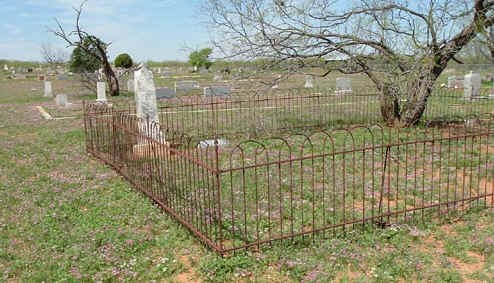
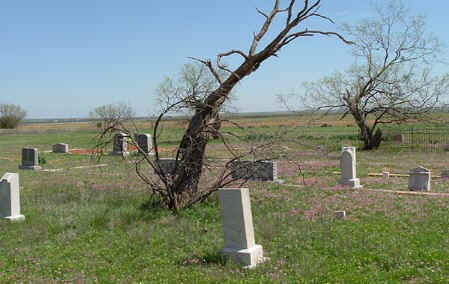
Sylvester, Fisher County, Texas is today defined as a ghost town. However, it is a place that a family from the Cabarrus and Stanly county areas of North Carolina migrated to during the early years of the last century.
It all began with one document.
Most of the land records in Cabarrus County, North Carolina involving F. F. Starnes also involved family. In the beginning, there were his and his fathers' acquisitions, but as Finch's children grew up, he parted off land for them, and he also took care of the Measmer's, children of his sister Jincy, who passed away. But as he was preparing to move to Charlotte, he also sold some lots to other people, who I was curious to see if they were relatives, or not, and how connected.
Jonah and Sarah Jane Kiser were one of these families.
The Kisers were a family of German descendants. Jonah was the son of a Civil War vet, who in turn was the Great-grandson of a German immigrant, Peter Kizer, who had settled in Mecklenburg County, North Carolina. In May of 1886, Jonah and his wife Sarah Jane, had paid off a mortgage to Frederick Fincher Starnes and now owned their property out-right.
Jonah was a young man of 26 in 1886. He had married his bride, Sarah Jane Howell, daughter of David Sides Howell and Margaret Gray Howell in 1880. Both were born in 1860. By 1886, the third of their 8 sons would be born.
In the 1880 census, the newlyweds are living in the Bethel Church section of southern Cabarrus County. Bethel is a very old church that still has the Arbor for tent services. Jacob Kiser is not a relative, but an employee.
Jonah K Kiser [Jonah Kiser]
Age:
40
Birth Date:
abt 1860
Birthplace:
North Carolina
Home in 1900:
Bethel Church, Cabarrus, North Carolina [Cabarrus]
By the 1900 census, the last of their 8 sons, Odis, was born.
Some time between 1900 and 1903, the Kiser family decided to pull up roots and move to the tiny town of Sylvester, Fisher County, Texas. I wondered why they would relocate from a fertile, growing and prosperous area, to a desolate, flat, dry place like Fisher County, Texas.
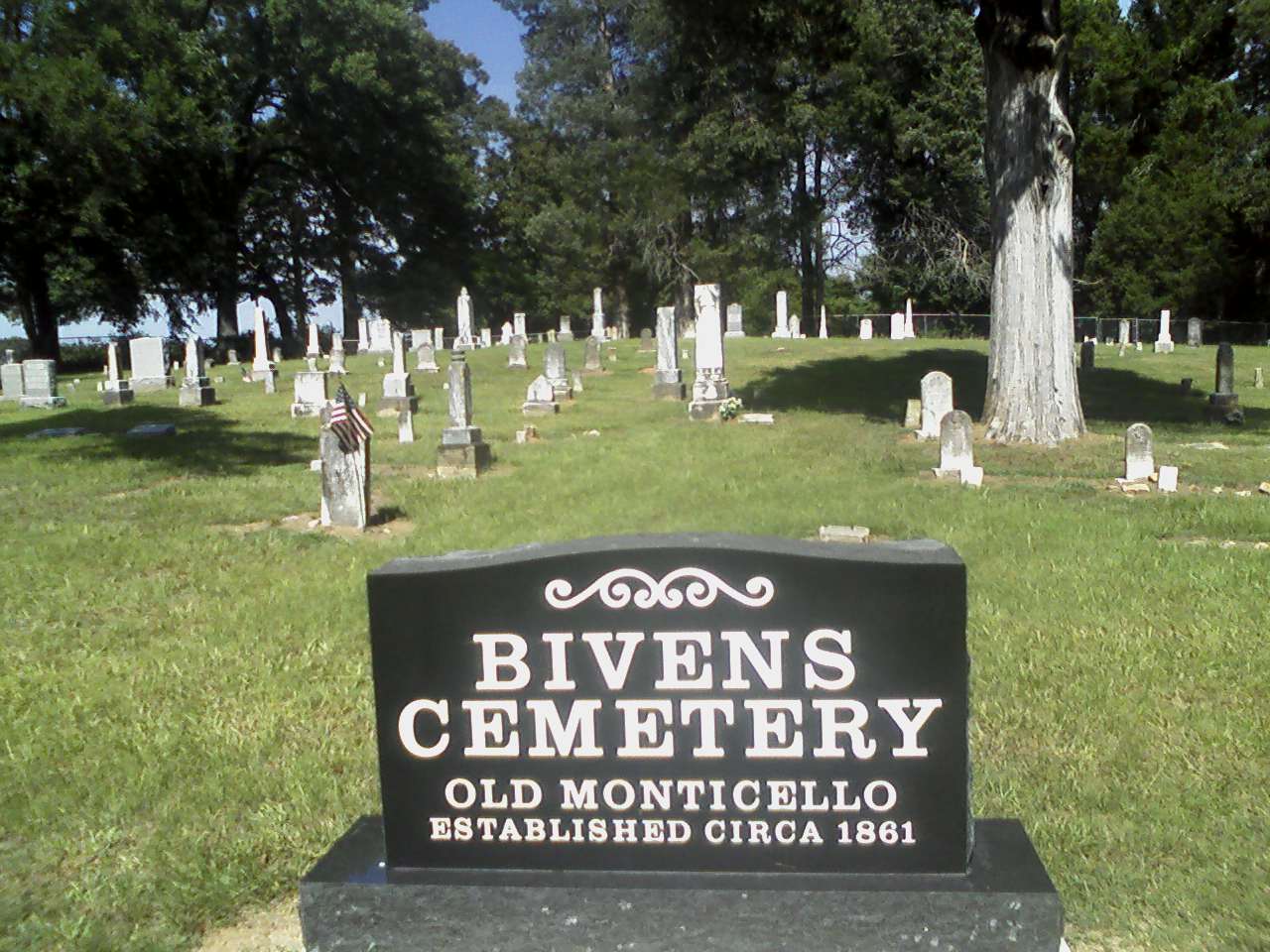
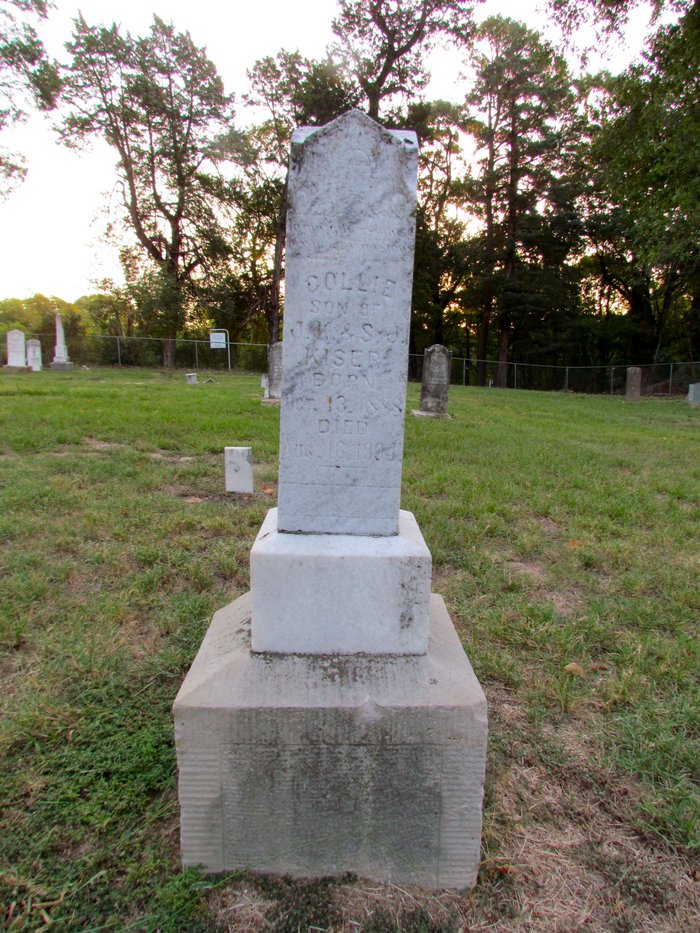
Young son Collie, must have died on the journey. He is buried near the town of Monticello, Texas. Monticello is 359 miles east of Sylvester, by way of Dallas. The family put up a monument for the teenager.
I wonder if he died of disease or in an accident. In August of 1904, when he passed away, he was 15 years old. Just after the turn of the century, the family could well have still been traveling west by wagon, and not by train. There were as yet no death certificates to solve this mystery. As the younger siblings made it, I don't think young Collie, who was nearly 16, died of disease. It seems someone else in the family, someone weaker, would have caught it as well. There must have been some hazard of the journey or accident that took the life of young Collie. Maybe he was bitten by a snake, or thrown from a horse, or drowned while trying to help get the wagon unstuck from a stream. I don't know if the answer is out there.
Monticello was not much of a place then, and is not much of a place now. Here is what the Texas State Historical Association has to say about Monticello.
MONTICELLO, TEXAS. Monticello is on Farm Road 127 just south of Lake Monticello eight miles southwest of Mount Pleasant in southwestern Titus County. It began in the 1850s and received a post office in 1857 with Cicero J. Corder as postmaster. A steam mill operated by Theodore Stewig was the largest business. The settlement remained small and in 1890 had an estimated population of thirty. By 1892 it had two stores, two mills, two gins, a brick factory, and a school. By 1896 only a store remained. From that point the population seems to have remained fairly constant until the late 1960s. It reached 149 by 1974, and the town was incorporated shortly thereafter. At the time of the 1980 census the population of Monticello was forty-three. It was forty-eight in 1990. In 2000 the population was twenty.
As the small town of Monticello, where Collie was buried, is very close to the very large lake of the same name, Collie's death may have very well had something to do with the lake, or trying to cross the water somewhere. Somehow, I feel his death was during the journey west, and 1904 was the year of travel.
Accounts say that Sylvester was a town promoted by its founders, the Compere Brothers, and by 1909, had it's largest population of 600 people.
Here is what Wikipedia had to say about Sylvester:
The Compere brothers of Abilene are credited with the founding of the community in 1903. They bought part of the AJ Ranch in anticipation of the arrival of the Kansas, Mexico and Orient Railway and named it in honor of W.W. Sylvester, the railroad's promotion manager.[2] The rails reached Sylvester in 1905 and businesses followed. By 1909, the community had an estimated population of 600. Sylvester incorporated in 1927 and the 1930 reported 382 residents.[1] That figure rose to 405 in 1940. Competition from nearby towns caused Sylvester to decline. It had reverted to unincorporated status by 1950 and by the 1980s, fewer than 100 people remained in the community.
Although Sylvester is unincorporated, it continues to have a post office in operation with the zip code of 79560.
Courtesy of Wikipedia
Naming a town for someone with the railroad was a sure way to get the railroad, businesses and population to your town. The prosperity did not last.
By 1910, one of the Kiser boys had married and had a child of his own.
Jonah is listed as a farmer and his sons helping him farm.
William Milton Kiser, known as Milton, married Mattie Parker, a girl from Mississippi and had became a father to his first child, daughter Sylvania. He was living in the household right next to his father.
Fisher County remains a sparsely populated area. As of 2010, the population of the entire county was still under 4000, or 5 people per square mile. An interesting fact was that in 1886, the town of Roby was declared the county seat over Fisher. It was later discovered that the deciding vote was cast by a Mr. Bill Purp. But Bill Purp turned out to be the dog of one of Roby's citizens.
Jonah Kiser had grown cotton in Cabarrus County. He may have moved to Fisher County, Texas to grow cotton there. Before the 1930's, when a boll weevil infestation destroyed most crops, cotton was a profitable crop in Fisher county.
"In 1900 Fisher County farmers produced 113,640 bushels of corn, 41,290 bushels of oats, 7,320 bushels of wheat, and 1,280 bales of cotton. After 1910 wheat and cotton increasingly took center stage, and by 1920 the county was among the state's leaders in wheat production. High prices for cotton, however, persuaded many farmers to dedicate ever-increasing acreage to cotton culture in the 1920s. "
"BIBLIOGRAPHY: R. C. Crane, "Early Days in Fisher County," West Texas Historical Association Year Book 6 (1930). Fisher County Historical Commission, History of Fisher County, Texas (Rotan, Texas: Shelton, 1983). E. L. Yeats and E. H. Shelton, History of Fisher County, (n.p.: Feather, 1971).
Hooper Shelton"
Abandoned church in Sylvester
By 1913, the Kiser's lost another teenaged son. The youngest, Odis, only 13, died on December 2 of this year. He is buried in the Sylvester community cemetery.
The Kiser's seemed to be one the main family in Sylvester after a while. The Kiser son's populated the community with children.
The Family of Jonah Keiler Kiser and his wife Sarah Jane Howell Kiser in total were 8 sons:
Lewis B Kiser 1882-1983
William Milton Kiser 1884 -1972
Eugene Cunningham Kiser 1886-1967
Collie Kiser 1888-1904
John Cletus Kiser 1891-1945
Odis Kiser 1892-1913
James Earnest Kiser 1896- 1977
Charles Gustavious Kiser 1899-2000
The third-born son Eugene Cunningham Kiser is missing from the 1910 census. This is because he had traveled back to Cabarrus County, North Carolina to get married. And this is the connection to my family tree in two directions. Lotha Mae Lambert was the daughter of Martin L Lambert and Rose Etta Starnes.
Martin L Lambert was the son of my 3rd great-grandfather, William "Buck" Lambert and half-brother to my Great, great-grandfather, Rufus A Lambert. Rose Etta or Rosetta or 'Etty' Starnes was the daughter of Allen Mack Daniel Starnes, a cousin of Frederick Fincher Starnes. AMD Starnes was the younger brother of Nathan Monroe Starnes and John C Starnes, whom F. F. Starnes was buried alongside. Their father, Nathan T Starnes and his father Frederick Starnes, Jr., were brothers, but the cousins were more like brothers in their transactions and associations.
Martin L Lambert died in 1892 and his widow remarried Columbus Monroe Kiser. C. M. Kiser was the son of Jonah K. Kiser's brother, Rufus Caldwell Kiser. Lotha was his step-daughter. There are several mysteries currently surrounding this family, but that is another post.
Eventually, Lotha's half-brother, Floyd Lindsay Kiser would also relocate to Texas, but at a later date. He is in Cabarrus County, NC in 1920, but in Fisher County, Texas by 1930. He married Neda Cornelius Gray White, who had a young son, Frederick A White.
Jonah and Sarah probably did not migrate alone, as in the 1910 cenus, the Cyrus Gray family is living next to them, and they also originated in the Bethel Church area of Cabarrus County. I don't know at this time if Neda is connected to them.
The Fourth son, John Cletus Kiser, would marry a Texas girl named Audy Mae. They would live in Comanche County, Texas and have 4 children.
The next to the youngest son, James Earnest Kiser, would also marry a Texas girl named Nova Ann and they would remain in Sylvester.
The youngest son, Charles Gustavious "Gus" Kiser, would marry a Texas girl named Buna Ethel and they would relocate eventually to Comanche County, Texas near J. Cletus Kiser.
The oldest son, Louis B Kiser, remained with his parents the longest, eventually moving to Parker, Texas and marrying Corrine Miller, from Texas, daughter of James T and Clara Miller. After Corrine's death in 1957, he would return to Fisher County, to the county seat of Roby.
Most of the ancestors who came to this little part of Carolina, came from the North, down the Great Wagon Road. A few others came up from the South, from the coastal towns of Charleston and Savannah and the Welsh Neck of South Carolina. Even fewer still were the Scotch-Irish that drifted in from the Sandhills in the East.
In the same way, a few of each large family would migrate South and West, some to Tennessee, others to Alabama and Georgia, but most to Arkansas and Texas. Some men even abandoned their families to never return.
There was an old diddy that went around these parts in the late nineteenth century, "Maw, Maw, where is Paw? He ran off to Arkansas."
Looking through land records of ancestors can get tedious, and that is what I've been delving through recently. But they can tell us things that we might not know otherwise.
For instance, some of the interesting things I picked up from land records recently were:
1) That Sarah Kennedy, the unusual lady of her times, took out a mortgage with my Davis family.
2) That James Robert Thompson, who disappeared from Stanly County with his wife and two young sons after the 1880 census, was listed as "of Marlboro County, South Carolina" in a sale of his share of his father, W.C. Thompson's property, after his father's estate was settled.
3) That E.W Davis and his wife Rebecca, maintained a house and property in Albemarle, as well as their farm property along the Rocky River, in the southern part of the county. That is likely why their son Thomas Ashley Davis moved to Albemarle, as the property had been left to him after his mother's death. They may have 'wintered' in town and summered on the farm.
4) I had found other documents suggesting this, but the land records show that George and Mary Coley had signed over their entire estate to Edmund Murray before their deaths, and that Edmund Murray promised to care for them in their old age. This corroborates my theory that Edmund, who is shown as a Murray in some records, and a Coley in others, was the grandson of George and Mary. He was also obviously the son of Benjamin Murray and also inherited the land of Ben's widow, Martha "Patsy" Murray after her death. She was far too young to be his mother, only 8 years his senior, and with the ambiguity of his name, shows he was not a legitimate son. His mother had been a Coley, in all probability and near to certainty, a daughter of George and Mary Coley, who may have passed away after his birth. Edmund must have been a very good man as both the Coley's and his stepmother, Patsy Murray, seemed most fond of him.
5) That Henry Davis had dealing in the Stanly County Gold Mine.
6) That Thomas Deberry Greene sold property to Cottonville Baptist Church.
7) That Frederick Lafayette "Fate" Starnes sold land to the Gibson Mill in Concord to build their factory.
8) That his father, Frederick Fincher Starnes sold land to Rocky River Presbyterian Church to extend their cemetery.
9) That Henry Davis bought and sold land on Cloverfork Creek, which lay north of the then Albemarle and is now encompassed by it.
10) That the "L" in Mary L Byrum Starnes stood for "Louise".
There is a great deal that can be learned in land records. They can provide proof of relationship, as in the division of land among a person's heirs. They can show where some of these heirs migrated to, if they did indeed relocate and not just pass away before the next census. It can also lend us surviving local landmarks, such as churchs, creeks and rivers, to tell us where exactly our ancestors lived in the area, and not just that long gone persimmon tree that marked the corner.